EU ADR Shipping Requirements for Fire Extinguishers
Learn ADR shipping requirements for wholesale fire extinguisher orders in the EU, with UN 1044 checks, Incoterms, and quote steps.
By Mattias EkstrandHead of Product and Trade SupplyFire protection engineer with fourteen years specifying fire safety equipment for EU trade buyers and procurement teams.
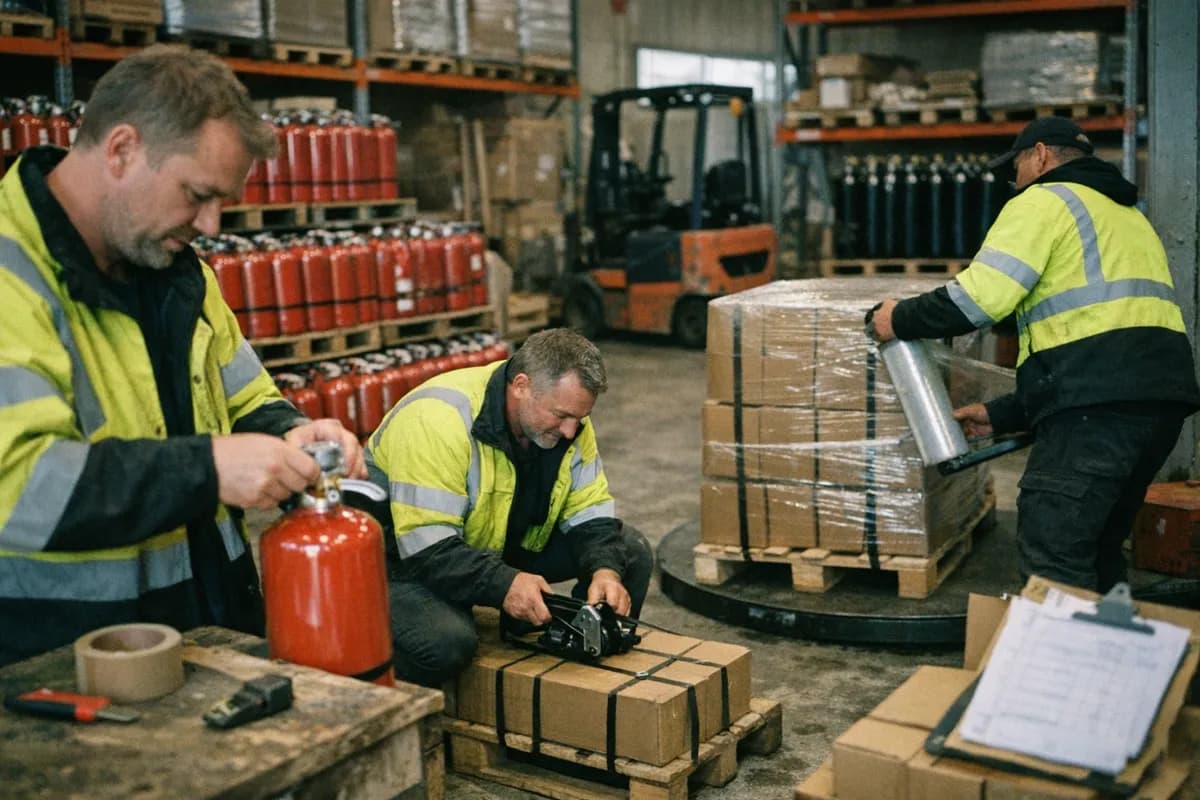
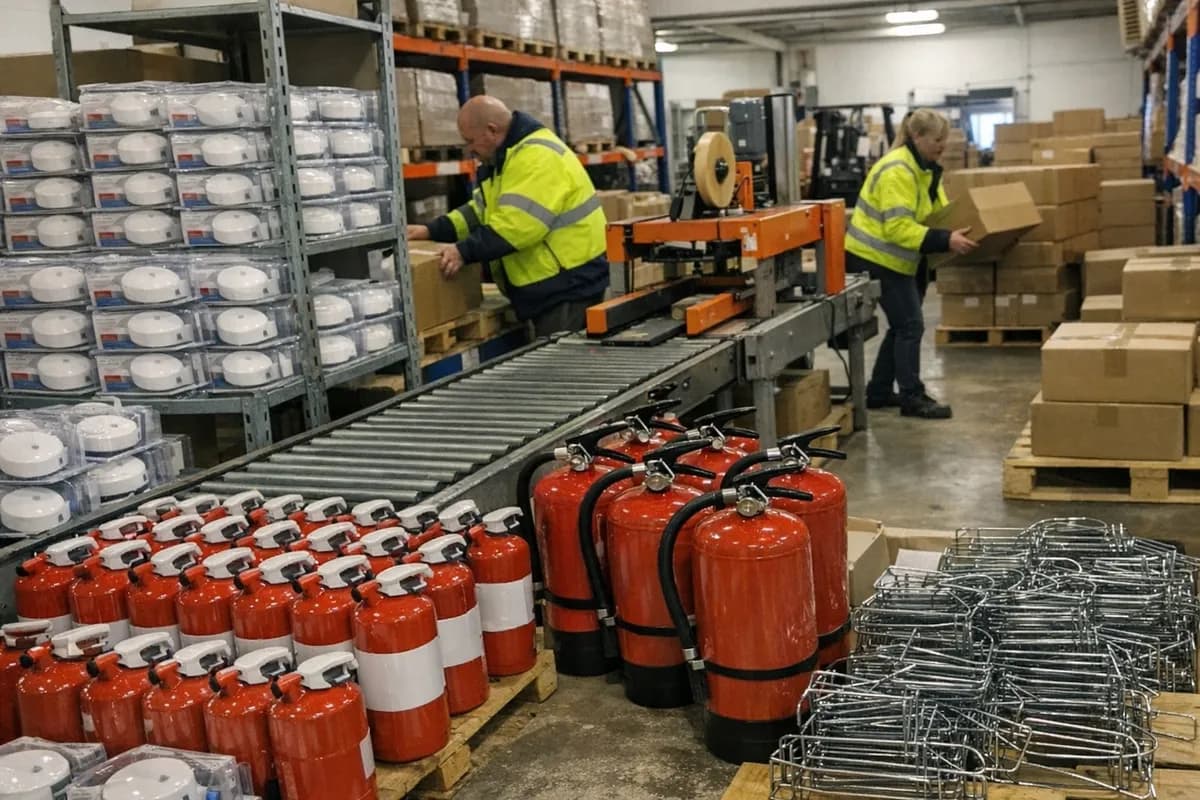
Wholesale fire extinguishers are not ordinary hardware for road freight. Most charged portable extinguishers are pressure articles, so an EU buyer needs to check ADR classification before fixing the Incoterm, carrier, pallet plan, and document set.
We supply extinguisher orders to B2B buyers under EXW, FCA, or DAP, depending on how much of the transport chain the buyer wants us to arrange. The practical question is not only “Can this be shipped?” It is “Who controls the ADR decision at handover, and what proof will the carrier accept?”
What ADR rules apply to wholesale fire extinguisher shipments in the EU?
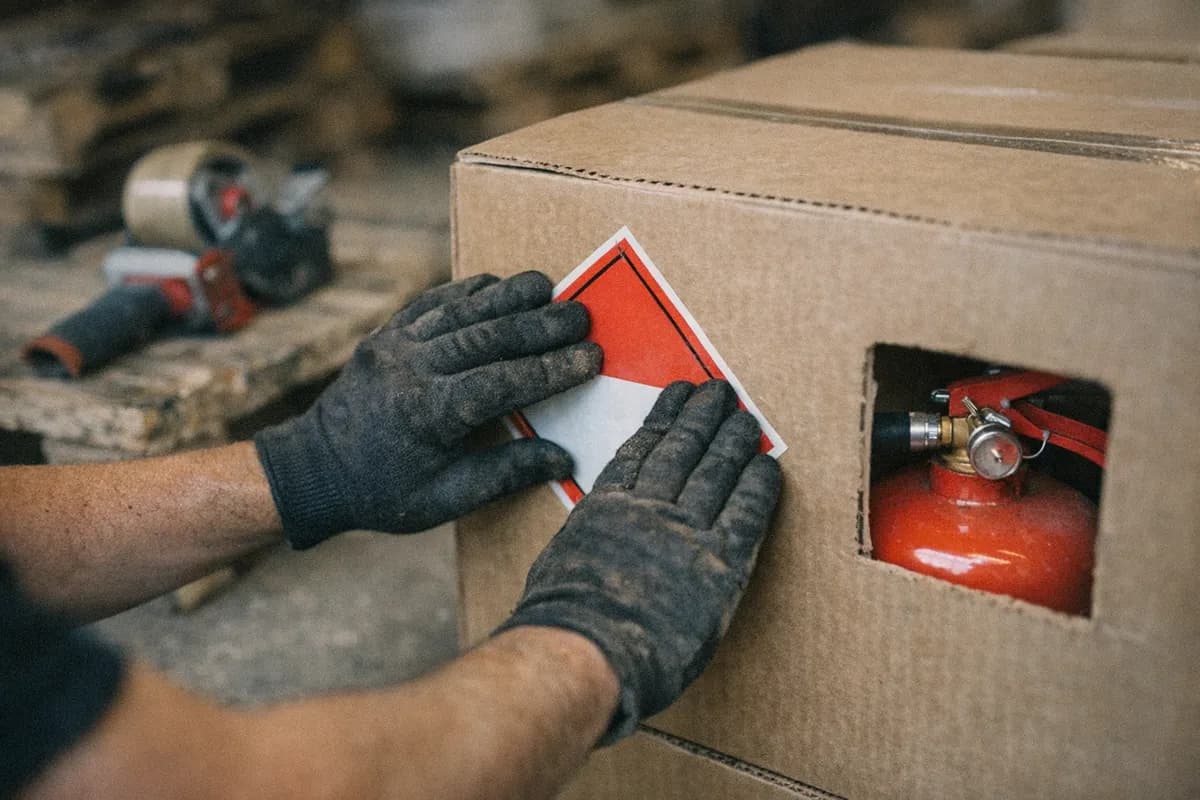
ADR applies to dangerous goods carried by road, and charged fire extinguishers are normally assessed under the ADR dangerous goods entry for fire extinguishers. UNECE publishes ADR, and ADR 3.2.1 Table A lists UN 1044 FIRE EXTINGUISHERS in Class 2 with hazard label model 2.2.
For EU road transport, the legal bridge is Directive 2008/68/EC of the European Parliament and of the Council, which applies inland dangerous goods rules to road, rail, and inland waterway transport inside the EU. In road freight practice, that means an EU wholesale order moving by truck needs an ADR check before the forwarder books the collection.
The main starting point is the UN number. For charged portable extinguishers, the usual entry is:
- UN 1044
- Proper shipping name: FIRE EXTINGUISHERS
- Class: 2
- Hazard label: 2.2
- Packing group: not assigned for Class 2 gases
Do not treat this as a label-printing exercise only. The carrier will want to know whether the order is moving fully regulated under ADR, under a quantity exemption, or outside ADR because a special provision applies. That answer affects vehicle equipment, driver requirements, transport document wording, collection acceptance, and sometimes the lane a haulier is willing to take.
Our role at quotation stage is to identify the SKU and Incoterm clearly. Your role as importer or procurement lead is to make sure your forwarder accepts the chosen ADR route before collection is fixed, especially on cross-border groupage.
Can fire extinguishers be exempt from ADR under Special Provision 594?
Yes, in certain cases. ADR Special Provision 594 states that fire extinguishers manufactured and filled according to the regulations applied in the country of manufacture, fitted with protection against inadvertent discharge, and packed in strong outer packagings are not subject to ADR.
That exemption is useful, but it must be checked against the real shipment. The carrier may ask how the valves are protected, whether the extinguishers are in strong outer packaging, and whether the product was manufactured and filled under the relevant national manufacturing rules. If one of those conditions is not met, the haulier may require the load to move as UN 1044 under ADR.
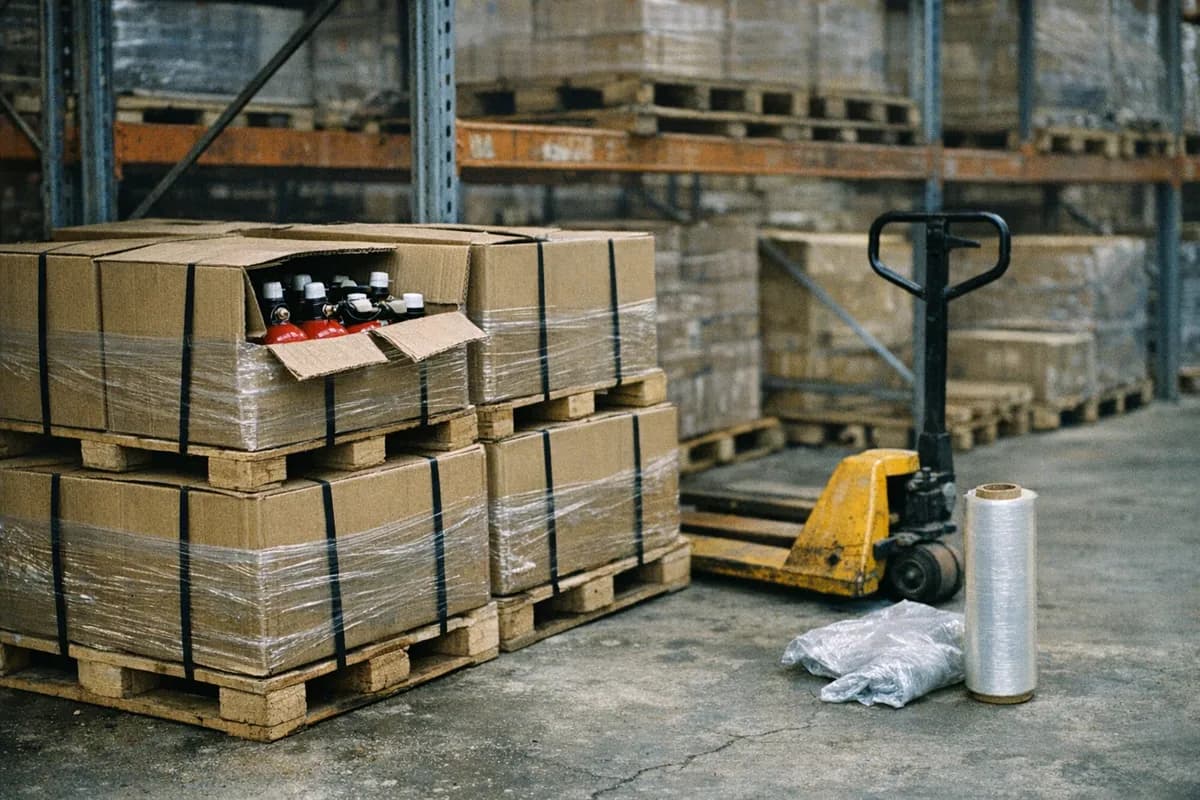
For wholesale orders, we recommend a simple decision file before booking transport:
- List the exact article numbers and quantities.
- Confirm whether each unit is charged and ready for sale.
- Confirm the outer packaging format proposed for the order.
- Ask the carrier whether it accepts the shipment under ADR Special Provision 594 or requires full UN 1044 documentation.
- Keep the carrier’s written acceptance with the shipment file.
This matters most when buyers nominate their own forwarder under EXW or FCA. A forwarder that regularly handles consumer goods may reject the collection late if the booking says “fire extinguishers” but does not include the ADR decision. Late rejection is avoidable if the UN 1044 and SP594 discussion happens before the pickup slot is booked.
If you are still selecting SKUs, start with our portable fire extinguishers range and send us the target market, order profile, and preferred Incoterm through our contact page. We can then prepare the product-side information your forwarder needs for its ADR check.
Which extinguisher specification should a buyer confirm before booking freight?
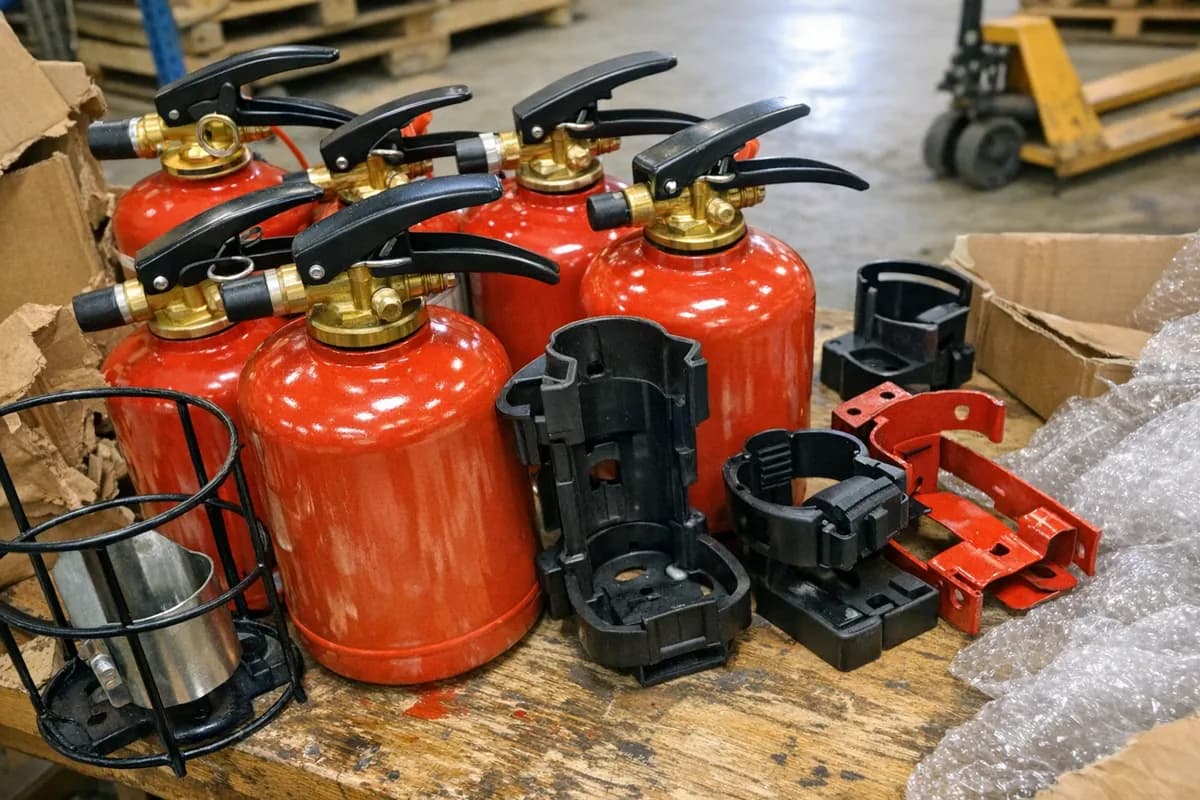
Confirm the extinguisher type, certification requirement, gross weight, operating temperature, mounting, and whether the product is EN 3-7 or supplementary equipment. These fields affect both commercial selection and the information a carrier or compliance team may request.
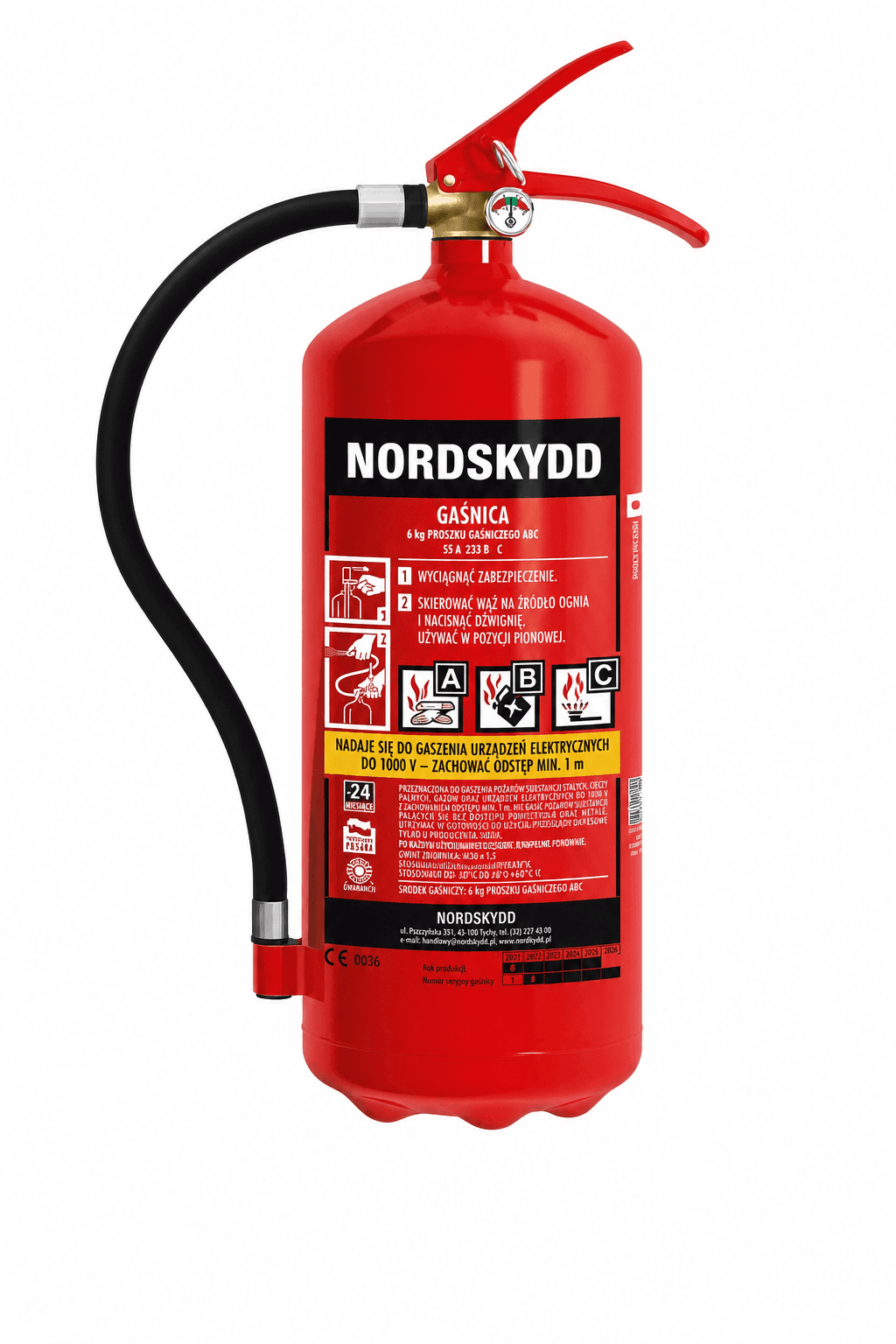
For general commercial cover, buyers often start with ABC powder. Our ABC Powder Fire Extinguisher, 6 kg is a Poland-manufactured unit with article number NV-FE-106, 55A 233B C fire rating, 6 kg ABC dry powder capacity, EN 3-7 standard, CE, EN 3-7, CNBOP-PIB, and ISO 9001 certifications, -30 °C to +60 °C operating temperature, live equipment safety to 1000 V, 495 mm height, 160 mm cylinder diameter, 9.3 kg gross weight, metal hook wall hanger, 2-year warranty from date of manufacture, HS code 8424.10, and EXW, FCA, or DAP Incoterms.
Related equipment
ABC Powder Fire Extinguisher, 6 kg
Stored-pressure 6 kg ABC powder extinguisher rated 55A 233B C, supplied with a wall hanger for boiler rooms, garages, workshops, plant areas, and general commercial applications.
CE · EN 3-7 · CNBOP-PIB · ISO 9001
View specificationsFor electrical rooms or electronics areas, buyers may specify CO2 instead of powder because residue matters at the point of use. Our CO2 Fire Extinguisher, 5 kg, with UDT Permit is an EN 3-7 unit rated 89B with a 14 kg gross weight. The product facts state a UDT permit, which can be relevant where the buyer wants Polish pressure-equipment documentation in the procurement file.
For offices, public buildings, or tenders that are moving away from fluorinated foam agents, the Liquid Fire Extinguisher, 6 L AB Fluorine-Free gives a fluorine-free AB option under EN 3-7 with a 27A 144B fire rating. That kind of agent choice is a specification decision first, then a freight decision after the order is defined.
The key sourcing point is that ADR classification does not replace product compliance. A carrier can move the goods correctly while the buyer still orders the wrong extinguisher for the building standard, tender text, or end-user application. We separate those checks in our workflow: product suitability first, ADR and Incoterm second.
What is the MOQ and price context for ADR fire extinguisher orders?
Our published product facts do not set a fixed MOQ for the extinguisher lines, so we quote after the SKU mix, order volume, Incoterm, and destination are known. For a current price, send the article numbers, quantities, delivery country, and preferred EXW, FCA, or DAP term via our contact page.
Price is driven by the extinguisher model, agent type, cylinder size, certification set, hanger type, packing requirement, and freight responsibility. A 1 kg vehicle extinguisher, a 6 kg workplace ABC powder unit, and a 5 kg CO2 cylinder do not build into the same pallet economics. Gross weight changes handling cost, while ADR status can affect which carrier accepts the load and what booking process it uses.
Incoterm choice changes the quotation boundary:
- Under EXW, the buyer’s forwarder controls collection and must be ready to accept any ADR classification or exemption position.
- Under FCA, we hand over to the carrier at the agreed named place, with the freight arrangement defined in the order.
- Under DAP, we quote delivery to the named destination, so we need the full address, unloading constraints, and any delivery booking rules.
Do not ask for a generic “ADR surcharge” without the SKU list. A carrier may treat a pallet accepted under Special Provision 594 differently from a fully regulated UN 1044 movement. Groupage, dedicated truck, and destination-country delivery rules can also produce different answers for the same goods.
What documents should be checked before an EU wholesale order ships?
Check the product compliance documents, the commercial documents, and the transport document decision before collection. The document set should match the exact SKU, not just the product family.
For product compliance, buyers usually ask for CE evidence and the applicable product standard claim. Many of our workplace portable extinguisher lines are EN 3-7, while some domestic liquid models are supplementary domestic equipment and are stated as not EN 3-7 in the product facts. CNBOP-PIB approval is SKU-specific in our range, so it should not be assumed across all extinguishers.
For customs and ERP setup, our extinguisher product facts use HS code 8424.10. Keep that code in the purchase order and invoice workflow so the logistics team does not have to infer classification from a product description such as “safety equipment.”
For ADR paperwork, the route depends on the carrier’s decision:
If the shipment moves fully regulated, ADR 5.4.1.1.1 requires the transport document to show the UN number, proper shipping name, hazard label model number, and packing group where assigned. For UN 1044 Class 2, no packing group is assigned. The carrier may also require tunnel restriction information and emergency instructions according to its ADR procedure.
If the shipment is accepted under Special Provision 594, keep written confirmation of that basis with the shipping file. The practical record should show that the fire extinguishers are protected against accidental discharge and packed in strong outer packaging. This is not a substitute for carrier approval, but it gives the buyer, forwarder, and warehouse the same reference point.
How should a buyer run the order from specification to delivery?
Run the sourcing process in the same order the shipment will be challenged: product, compliance, Incoterm, ADR decision, then booking. That sequence prevents the common problem where price is agreed before the carrier accepts the goods.
Start by fixing the end-use requirement. For workshops and plant rooms, ABC powder is often selected for A, B, and C fire cover. For kitchens or areas where powder residue is a concern, ABF or water mist may be the better tender fit. For electronics areas, CO2 may be specified. The product page should match the tender wording before the logistics team books freight.
Next, confirm the product documentation fields that matter in your market: EN 3-7 status, CE, CNBOP-PIB where required, warranty period, mounting format, and operating temperature. Do not mix EN 3-7 workplace products with supplementary domestic equipment unless the resale channel or project specification allows that distinction.
Then choose the Incoterm. If your company already has an ADR-capable forwarder, EXW or FCA may be efficient. If you want us to quote delivery to your site, use DAP and give the destination address before asking for a delivered price. DAP is only accurate when the delivery point, pallet access, and booking requirements are known.
Finally, close the ADR position in writing. Ask the forwarder whether it will carry the order as UN 1044 under ADR, under a quantity exemption, or outside ADR by applying Special Provision 594. The answer should be visible to procurement, warehouse, and accounts, because it affects transport cost and the documents checked at goods receipt.
For buyers comparing multiple extinguisher types, our equipment catalogue gives the SKU-level starting point. Once the shortlist is fixed, we can quote against the exact articles and freight boundary rather than a generic extinguisher description.