Portable Fire Extinguisher Types: A-F Selection Chart
Fire extinguisher types and fire classes A-F explained for buyers who need a selection chart, SKU checks, and quote inputs.
By Mattias EkstrandHead of Product and Trade SupplyFire protection engineer with fourteen years specifying fire safety equipment for EU trade buyers and procurement teams.
Selecting portable fire extinguishers is a product-specification task before it is a purchasing task. A buyer has to match the fire class, agent type, fire rating, operating temperature, certification requirement, mounting format, and resale channel before comparing unit prices.
We supply B2B extinguisher orders from our European range under EXW, FCA, or DAP. This guide sets out how we read fire classes A-F in European sourcing practice, how to shortlist extinguisher types, and what to send us when you need a quote for wholesale supply.
What do fire classes A-F mean for extinguisher selection?
CEN’s EN 2 fire classification standard defines five fire classes for this selection exercise: A, B, C, D, and F. The letter is the starting point, but buyers should also check the tested fire rating printed in the product facts, such as 55A 233B C or 8A 55B 40F.
Class A covers solid materials that normally form glowing embers, such as wood, paper, textiles, and many furnishing materials. For this class, buyers commonly specify ABC powder, foam, water mist, or selected liquid extinguishers, depending on the cleaning requirement and building use.
Class B covers flammable liquids and liquefiable solids. Foam, ABC powder, BC powder, and CO2 are common options, but the suitability changes by location. A workshop with fuels may accept powder residue. A server room or control cabinet usually cannot.
Class C covers flammable gases. ABC and BC powder extinguishers carry C-class suitability in our range. Foam and CO2 units are not a like-for-like substitute for a C rating in a tender or safety plan.
Class D covers combustible metals. Our listed portable extinguisher range is not presented as D-rated. If a risk assessment names magnesium, sodium, lithium metal, aluminium powder, or another metal fire risk, the buyer should specify a D-class product with matching documentation rather than substituting a general ABC, foam, or CO2 extinguisher.
Class F covers cooking oils and fats. This is relevant for domestic kitchens, staff kitchens, hospitality, food retail, and housing projects. ABF liquid and water-mist units in our range carry F ratings where stated in the product facts.
There is a common trap in the phrase “A-F”: it does not mean that a European buyer should expect a separate “E” fire class. Electrical equipment is normally treated through electrical safety claims and the choice of agent. Several of our extinguisher product facts state live-equipment safety to 1000 V, with distance wording stated on specific SKUs where applicable.
Which extinguisher type matches each fire class?
For a quick selection chart, match the class letter to the agent first, then verify the product’s tested rating and certification. Do not let the agent name replace the rating line in the specification.
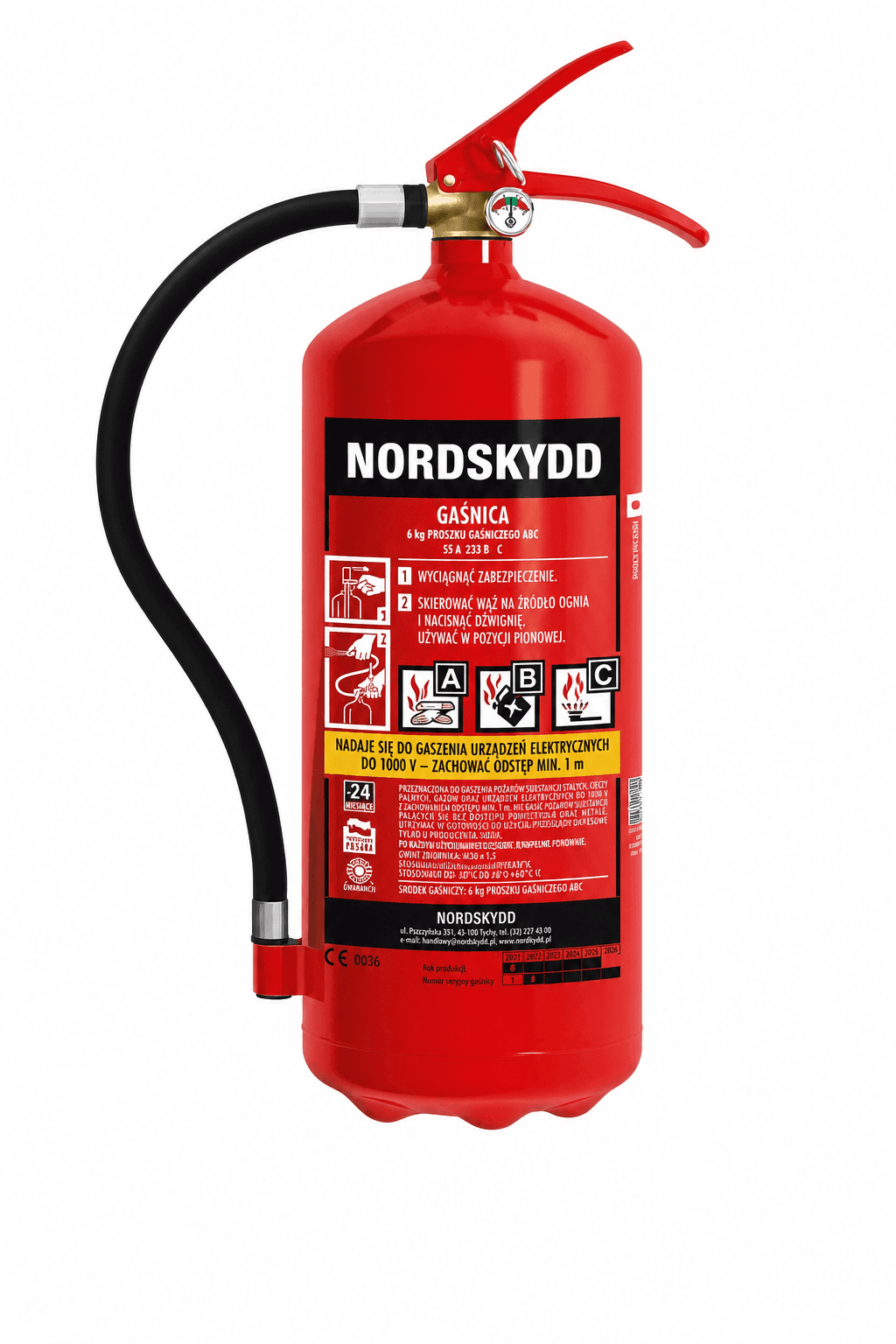
For Class A, start with ABC powder where broad cover and cold storage are more important than clean-up. Our 6 kg ABC powder extinguisher is rated 55A 233B C under EN 3-7 and operates from -30 °C to +60 °C, which makes it a practical candidate for workshops, plant rooms, garages, warehouses, and unheated areas. Smaller ABC units can suit vehicles or compact mounting points, but the lower capacity changes both rating and user expectation.
Related equipment
ABC Powder Fire Extinguisher, 6 kg
Stored-pressure 6 kg ABC powder extinguisher rated 55A 233B C, supplied with a wall hanger for boiler rooms, garages, workshops, plant areas, and general commercial applications.
CE · EN 3-7 · CNBOP-PIB · ISO 9001
View specificationsFor Class B, choose between powder, foam, and CO2 by residue tolerance. ABC powder gives broad A, B, and C cover. BC powder focuses on B and C, which can suit vehicle programmes where the buyer does not need an A rating. CO2 leaves no powder residue, so buyers often consider it for electrical and equipment areas, but it normally carries a B rating rather than A or F cover.
For Class C, use an extinguisher that states C in the rating. Our ABC powder lines and BC powder vehicle extinguisher facts include C-class suitability. If the tender says “C”, do not quote a foam extinguisher just because the price or packaging is attractive.
For Class F, specify an extinguisher that carries an F rating. Our 2 L ABF liquid extinguisher is rated 8A 55B 40F under EN 3-7, while our 6 L water-mist extinguisher is rated 13A 40F. The ABF unit adds B-class cover, while water mist can be preferred where the buyer wants demineralized water as the agent and no powder discharge.
For Class D, stop and verify the actual metal risk. A battery-fire concern is not automatically a D-class metal-fire requirement. We carry VER-DIS lithium-ion extinguisher options for lithium-ion battery incidents, but those product facts show A fire ratings and CNBOP-PIB approval rather than D-class ratings. If lithium-ion risk is central to the tender, compare the battery-fire requirement separately from the A-F chart and review our lithium-ion extinguisher checks.
If you are building a mixed range for resale, start from our portable fire extinguishers category and shortlist by class rating before choosing cylinder size.
Which specifications should a wholesale buyer put on the RFQ?
Put the fire class, fire rating, agent type, standard claim, certification requirement, operating temperature, mounting, Incoterm, destination, and quantity on the RFQ. That gives us enough information to quote the correct SKU rather than a generic extinguisher description.
A workable RFQ line looks like this: “6 kg ABC powder, EN 3-7, minimum rating 55A 233B C, wall hanger, CE, delivery under FCA or DAP.” That wording is much easier to price and verify than “large fire extinguisher for workshop.”
For kitchens, the RFQ should state whether F rating is mandatory. A buyer sourcing for housing, food service, or property management may need ABF liquid or water mist rather than powder. Our 2 L ABF unit is rated 8A 55B 40F, while the 3 L ABF version is rated 13A 89B 40F. The difference matters if your customer’s fire-risk assessment sets a minimum rating.
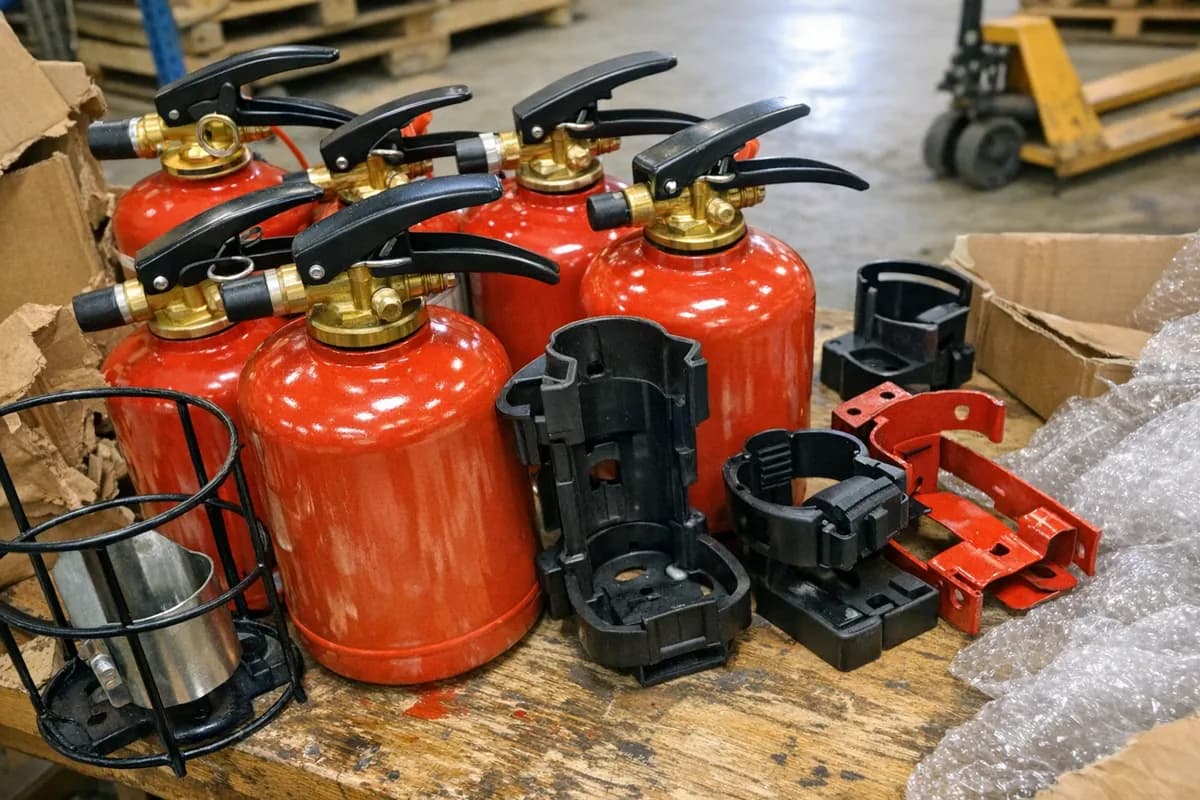
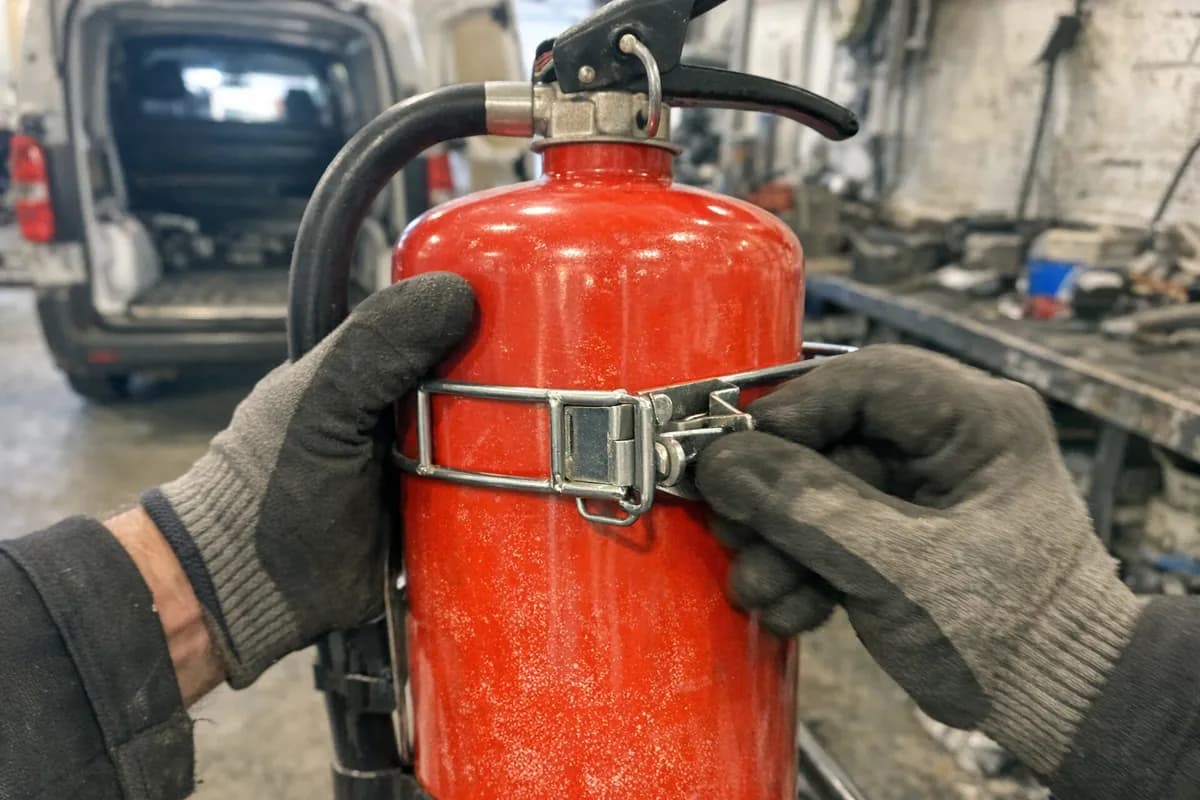
For vehicles, dimensions and bracket type are not secondary details. Our 1 kg ABC vehicle extinguisher is supplied with a plastic vehicle hanger and has a gross weight of 1.7 kg. Our 2 kg ABC vehicle-format unit is supplied with a metal basket hanger and has a gross weight of 3.7 kg. That difference affects boot kits, fleet installation, and carton planning.
For electronics, ask whether the customer wants CO2 for no powder residue or a different agent for a specific battery risk. Our 2 kg CO2 extinguisher with UDT permit is rated 34B under EN 3-7. Our 5 kg CO2 extinguisher is rated 89B. Those are not the same user case as an ABF kitchen extinguisher or an ABC powder workshop unit.
If the buyer needs PFAS-free foam for a public-building or corporate purchasing policy, state that on the RFQ. Our 6 L fluorine-free AB foam extinguisher is rated 27A 144B under EN 3-7, and the 9 L fluorine-free version is rated 34A 183B. For wider purchasing context, we also keep a separate guide on the EU PFAS ban for fire extinguishers.
Send the shortlist, target market, and delivery country through our contact page if you want us to check the article numbers before you issue a purchase order.
What is the minimum order and price context for extinguisher types?
Our published product facts do not set a fixed MOQ for the extinguisher lines, so we quote after SKU mix, order volume, Incoterm, and destination are confirmed. Price is driven by cylinder size, agent type, fire rating, certification set, mounting format, packing requirement, freight boundary, and seasonally available production slots.
A 1 kg vehicle extinguisher, a 6 kg ABC workplace extinguisher, a 2 L ABF kitchen extinguisher, and a 5 kg CO2 cylinder do not have the same cost structure. Gross weight changes handling and freight. Certification requirements also matter, because an EN 3-7 unit with CNBOP-PIB approval is not the same specification as supplementary domestic equipment that is stated as not EN 3-7.
Incoterm choice changes the price boundary. Under EXW, the buyer controls collection and export-side freight arrangements from the agreed place. Under FCA, handover is made to the carrier at the named place. Under DAP, we quote delivery to the named destination, so we need the full address and any site booking requirements before pricing.
There is no useful public terminal benchmark for portable extinguisher pricing that we would quote in an article. For manufactured fire-safety equipment, the live quotation is built from the selected SKU, confirmed volume, packaging, compliance requirement, and freight route. Send article numbers and quantities through our contact page for a current quotation.
Which certifications and documents should be checked before ordering?
Check the product standard and approval status at SKU level, not by extinguisher family. In our range, many workplace portable extinguishers are EN 3-7, while some domestic liquid products are supplementary domestic equipment and are explicitly stated as not EN 3-7.
For EN 3-7 portable extinguishers, the buyer should check that the fire rating, agent type, capacity, and certification set match the tender or resale market. Our product facts may include CE, EN 3-7, CNBOP-PIB, ISO 9001, PED 2014/68/EU, or UDT permit depending on the SKU. Do not assume one document set across powder, CO2, foam, liquid, water mist, and lithium-ion targeted products.
For customs and ERP setup, our extinguisher product facts use HS code 8424.10. Fire blankets and signs use different HS codes in the product facts, so avoid building a mixed fire-safety order under one customs line without checking each product group.
For visual compliance on installation, location signs may be part of the same procurement file. Our fire extinguisher sign is a 150 x 150 mm hard PVC adhesive-backed F01 sign to PN-EN ISO 7010, with CNBOP-PIB approval stated in the product facts. That is a separate product from the extinguisher itself, but it often belongs in the same project bill of materials.
How should an order move from selection chart to purchase order?
Move in this order: fire class, rating, agent, certification, mounting, quantity, Incoterm, destination. That sequence keeps the technical choice ahead of the commercial negotiation.
First, map each use location. A kitchen may need F cover. A plant room may need broad A, B, and C cover. A server room may need no powder residue. A lithium-ion storage or charging area may need a separate battery-fire discussion rather than a simple A-F substitution.
Second, set minimum ratings. If your customer asks for Class A cover, state the required rating number, not only the letter. A 13A unit and a 55A unit are both A-rated, but they are not equivalent in a specification.
Third, decide which products are EN 3-7 requirements and which are acceptable as supplementary domestic equipment. This matters for housing associations, retail safety kits, workplace tenders, and national-market resale.
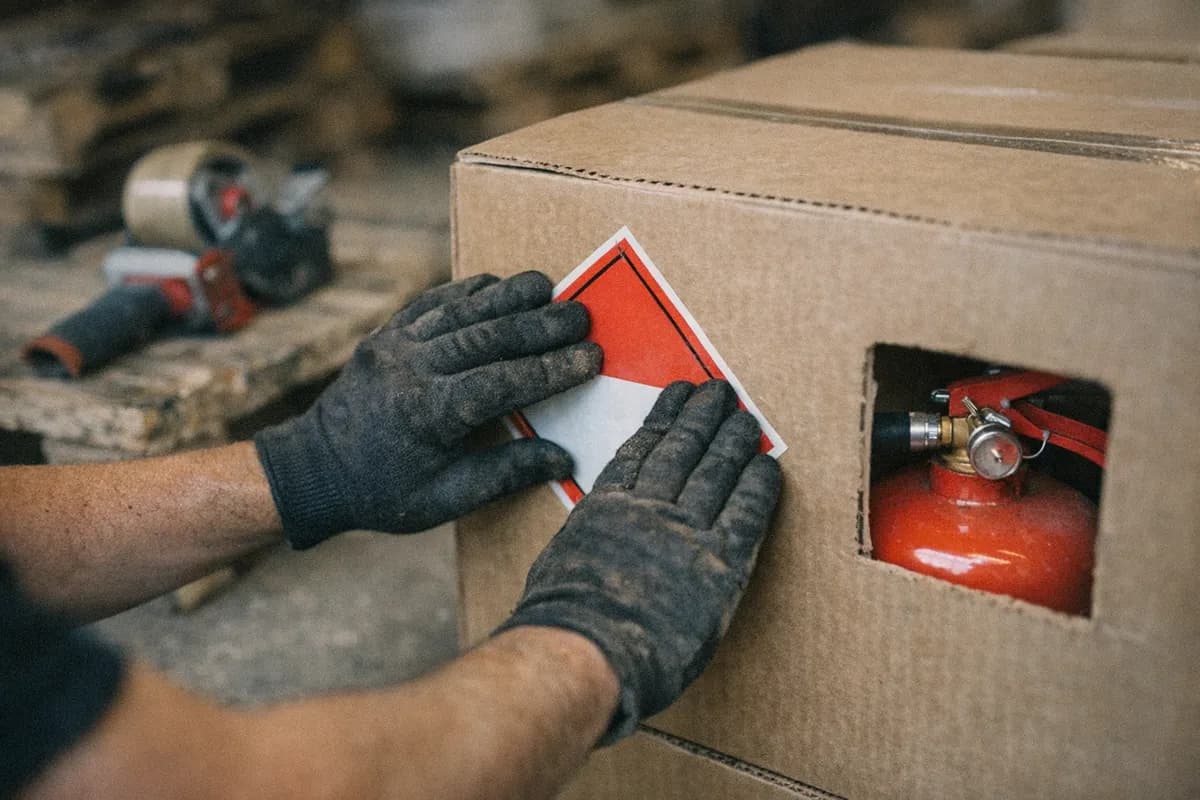
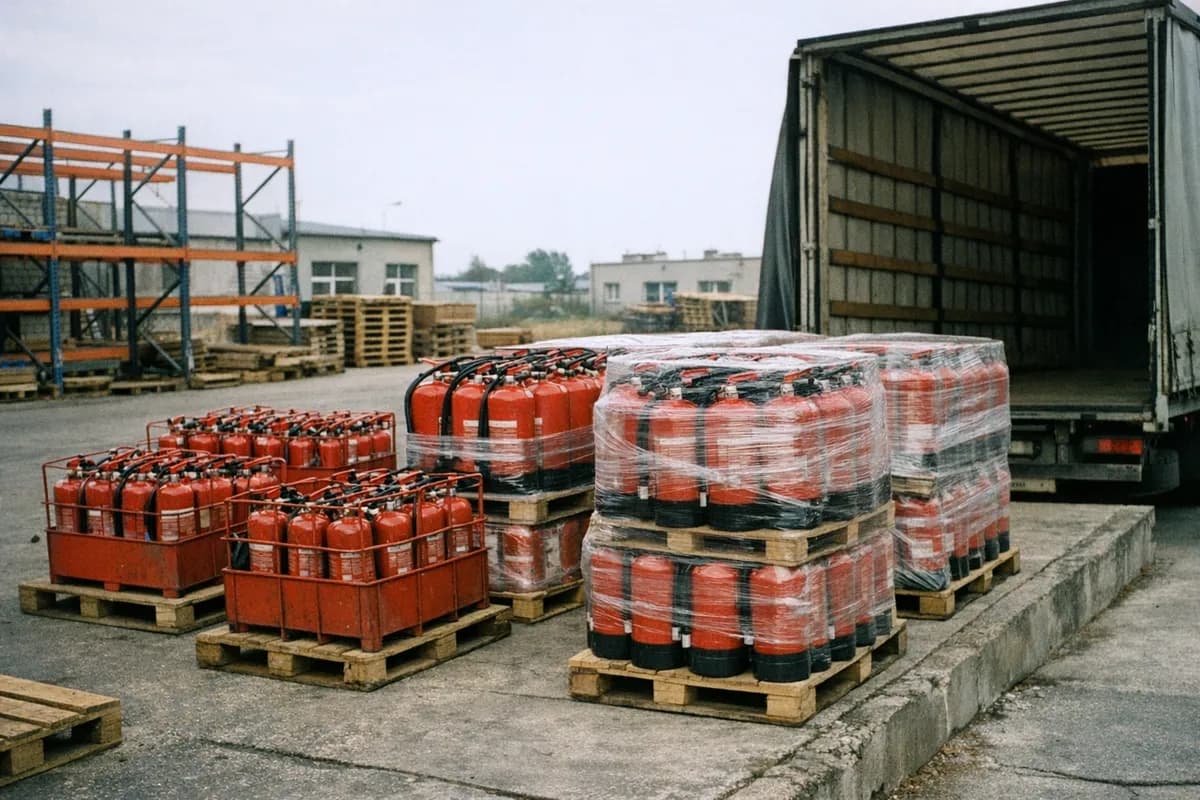
Fourth, confirm logistics. Extinguishers are pressure articles, and freight acceptance should be checked before collection. We cover this separately in our guide to EU ADR shipping requirements for fire extinguishers.
Finally, send the article list for quotation. A clear RFQ lets us price the real basket rather than guessing from “A-F fire extinguisher selection chart.” That is the practical route from class letters to stocked, documented, and deliverable extinguisher lines.