UK Domestic Fire Safety Kits for Housing Associations
Specify domestic fire safety kits for UK housing association supply with clear SKU choices, standards checks, Incoterms, and quote inputs.
By Mattias EkstrandHead of Product and Trade SupplyFire protection engineer with fourteen years specifying fire safety equipment for EU trade buyers and procurement teams.
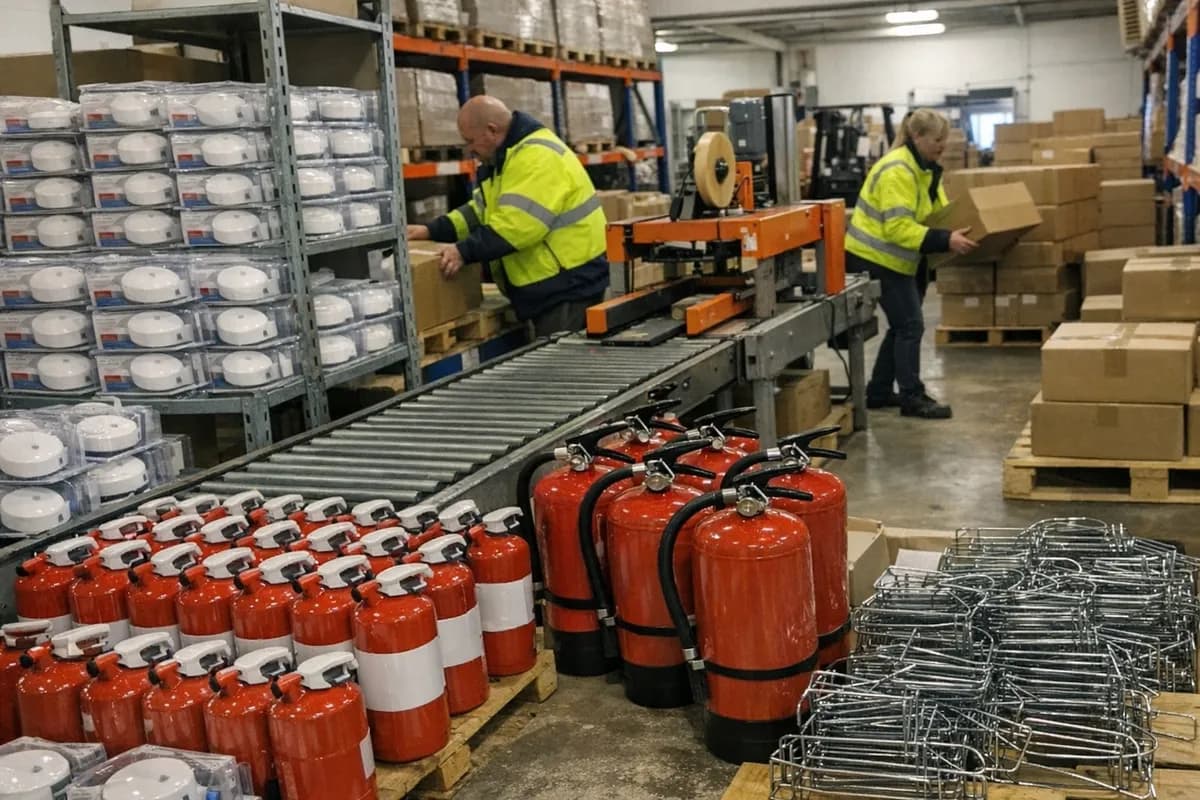
Housing association supply is usually a repeatable procurement task: one approved kit, one installation instruction, one maintenance record, and one set of documents that can be checked by the landlord, contractor, and resident services team.
We supply domestic fire safety kits as B2B stock for property programmes, retail safety ranges, and managed housing projects. For housing association buyers, the main specification decision is whether the dwelling needs an apartment kit with one 2 L ABF liquid extinguisher and a smoke detector, or a house kit that adds a 4 kg ABC powder extinguisher for areas such as garages, plant cupboards, or boiler spaces.
Which domestic fire safety kit should a housing association specify?
For flats and small dwellings, specify an apartment kit when the procurement brief needs early smoke detection and a reachable domestic extinguisher in one SKU. For houses, specify the house kit when the project needs a second extinguisher with ABC powder cover for higher-risk ancillary areas.
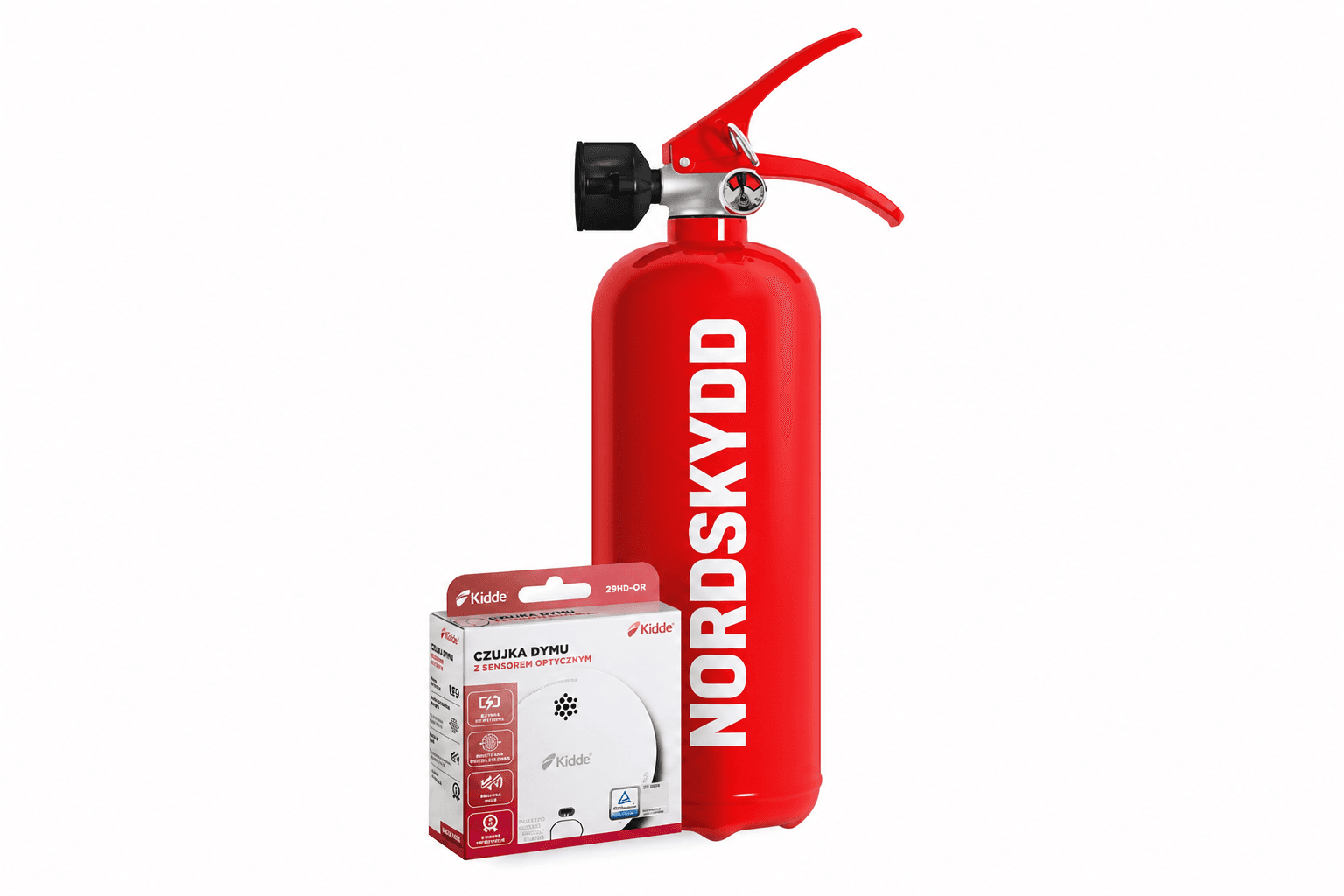
The two apartment options are functionally similar, with the main difference being the extinguisher and hanger colour. The Apartment Home Safety Kit, Red 2 L ABF + Optical Smoke Detector uses a red 2 L ABF liquid extinguisher and red metal basket wall hanger. The Apartment Home Safety Kit, White 2 L ABF + Optical Smoke Detector uses the white version of the same domestic extinguisher format and a white hanger, which may suit resident-facing interiors where a neutral finish is specified.
Related equipment
Apartment fire safety kit, Red
Residential bundle pairing a red 2 L ABF domestic liquid extinguisher rated 8A 55B 40F with a 2030-DSR optical smoke detector for flats and small homes that need one SKU for early warning and reachable fire cover.
CE · ISO 9001 · EN 14604:2005
View specificationsBoth apartment kits include a 2030-DSR optical smoke detector with a replaceable 9V battery. The detector standard stated in our product facts is PN-EN 14604:2006, equivalent to EN 14604:2005, with TÜV Rheinland certification. The extinguisher in each apartment kit is a 2 L ABF liquid unit rated 8A 55B 40F, with +5 °C to +60 °C operating temperature and live equipment safety to 1000 V.
For detached or larger managed homes, the House Home Safety Kit, Red 4 kg ABC + 2 L ABF + Optical Smoke Detector combines the same domestic 2 L ABF extinguisher and smoke detector with a 4 kg ABC powder extinguisher. The 4 kg powder unit is rated 27A 144B C, certified to EN 3-7, and supplied with a metal hook wall hanger. That gives the buyer one article for a dwelling where the kitchen or living space needs liquid media, while a garage, boiler room, or utility area needs a broader ABC powder extinguisher.
If the association wants to keep resident instructions consistent, avoid mixing many small SKUs without a reason. A red apartment kit for one estate and a white apartment kit for another can be justified by design policy, but switching between extinguisher types across similar dwellings makes installation records and resident guidance harder to control.
What standards and certificates should be written into the tender?
Write the detector standard, extinguisher status, certification set, mounting method, and warranty period into the tender. Do not write “EN 3 domestic kit” unless the actual extinguisher in the kit is EN 3-7, because the 2 L domestic liquid extinguisher in our apartment kits is supplementary domestic equipment, not EN 3-7.
For UK rented housing, smoke alarm requirements should be checked against the relevant nation and tenure. In England, the UK Department for Levelling Up, Housing and Communities guidance for the Smoke and Carbon Monoxide Alarm Regulations requires at least one smoke alarm on every storey used as living accommodation. That legal duty is separate from buying a kit, but it explains why procurement teams usually specify the smoke detector standard and installation point before approving a resident pack.
For our apartment kits, the smoke detector is the standards anchor: EN 14604:2005 is the detector standard named in the product facts. The 2 L domestic liquid extinguisher is CE marked, produced under ISO 9001, and supplied as supplementary domestic equipment with a non-standard label and no CNBOP-PIB approval. That distinction matters if a contractor’s template assumes every extinguisher is an EN 3-7 portable.
The house kit has a mixed compliance profile. Its 4 kg ABC powder extinguisher is EN 3-7 and CNBOP-PIB approved, while the 2 L ABF domestic liquid extinguisher remains supplementary domestic equipment. We recommend writing both lines clearly in the specification so the compliance file does not overstate the domestic liquid extinguisher.
A practical wording pattern is:
- “2030-DSR optical smoke detector, EN 14604:2005.”
- “2 L ABF domestic liquid extinguisher, supplementary domestic equipment, CE, ISO 9001, supplied with metal basket wall hanger.”
- “Where house kit is specified: 4 kg ABC powder extinguisher, EN 3-7, CNBOP-PIB approved, supplied with metal hook wall hanger.”
This wording is easier to verify than a broad phrase such as “approved fire safety kit.” It also gives the receiving warehouse a checklist for matching cartons to the purchase order.
What should the housing association kit schedule include?
The schedule should include the dwelling type, kit article number, colour, mounting location, installer responsibility, resident handover item, and replacement responsibility for batteries or expired equipment. Without those fields, a correct product can still be installed inconsistently across an estate.
Start with the SKU. The red apartment kit is article number NV-HSK-AP01R, while the white apartment kit is NV-HSK-AP01W. The house kit is NV-HSK-HO01R. Keeping the article number in the schedule reduces substitution errors when the same contractor installs both flat and house packages.
Then define the visual choice. Red extinguishers are easier to identify as fire equipment. White extinguishers may be preferred where the association wants the unit visible but less intrusive in kitchens, corridors, or supported-living accommodation. The buyer should decide that before order release, not after the first installation visit.
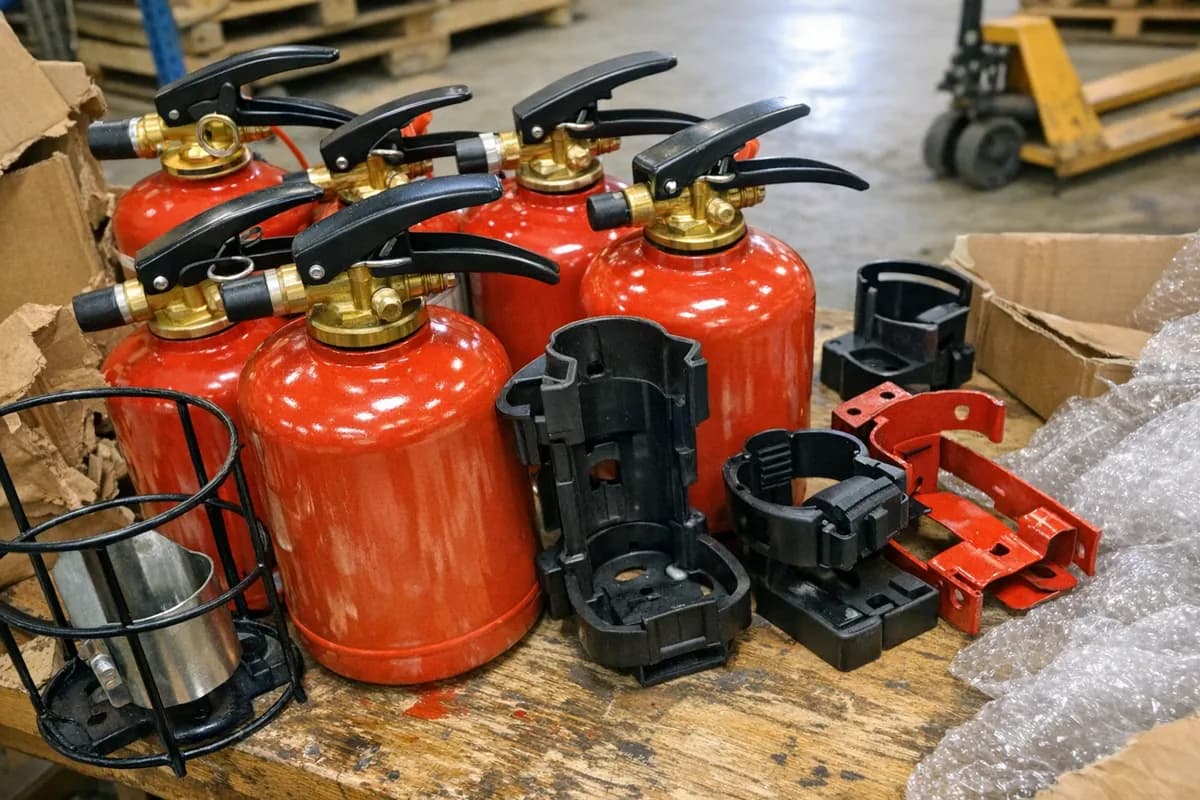
Mounting needs a line of its own. The apartment kits include a metal basket wall hanger for the 2 L extinguisher, and the smoke detector is supplied with ceiling or wall mount hardware. The house kit includes a metal hook wall hanger for the 4 kg powder extinguisher as well as the basket hanger for the 2 L liquid extinguisher. If the installation contractor needs additional fixings for a specific wall type, that should be handled in the installation scope rather than assumed inside the kit.
Warranty periods should also be visible to asset managers. In our kit product facts, the 2 L extinguisher carries a 5-year warranty from date of manufacture, the 4 kg powder extinguisher carries a 2-year warranty, and the detector carries a 3-year warranty. Those dates do not replace inspection policy, but they help procurement separate product warranty from the landlord’s maintenance schedule.
Where the association is also fitting location signs or blankets in communal kitchens or sheltered accommodation schemes, review the wider home fire safety equipment range before locking the schedule. Add only the items the site survey requires, because a resident kit and a communal-area fire point are different specifications.
What is the MOQ and price context for domestic fire safety kits?
Our published product facts do not set a fixed MOQ for the domestic fire safety kits, so we quote after the SKU mix, quantity, Incoterm, destination, and delivery timing are known. Send the article numbers and forecast volume through our contact page if you need a current B2B quotation.
There is no terminal market benchmark for a finished fire safety kit. The price is built from the selected kit, component mix, order volume, packing or labelling requirements, Incoterm, delivery country, and the requested shipment window. A one-SKU apartment programme is simpler to quote than a mixed call-off covering red apartment kits, white apartment kits, and house kits.
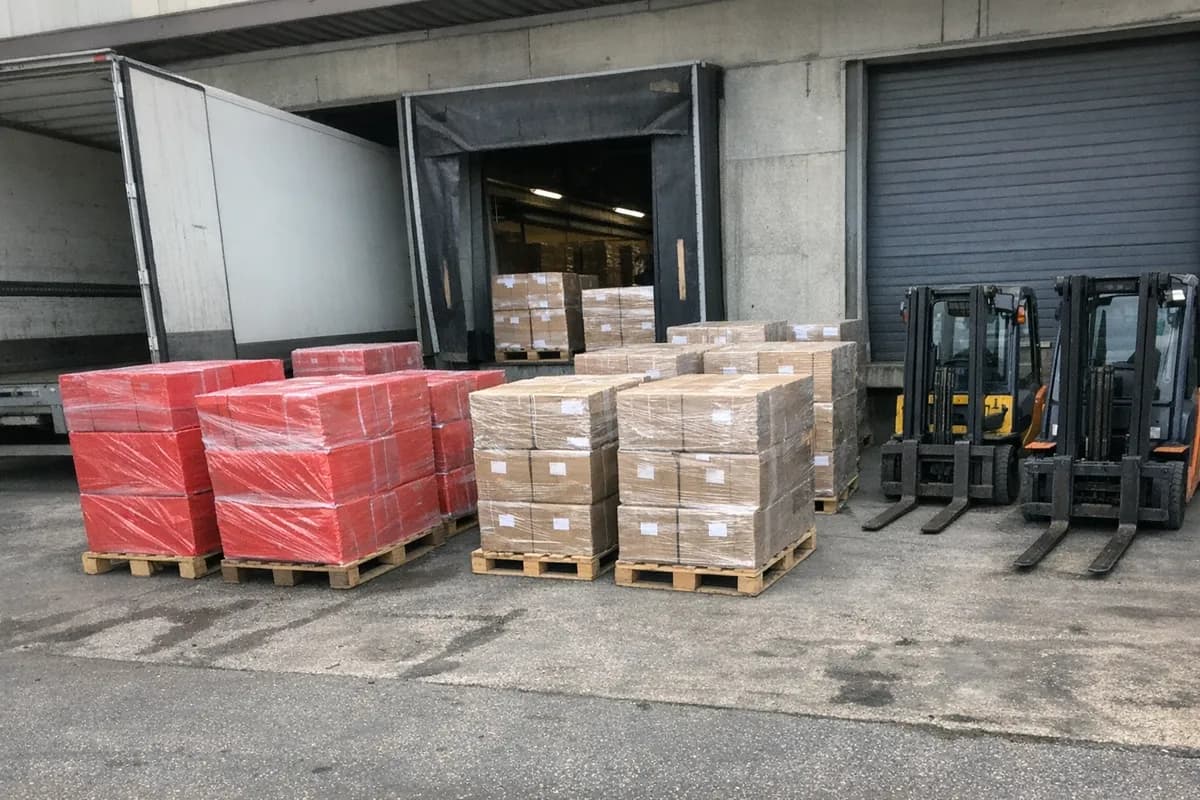
Incoterm choice changes the boundary of the offer. We can quote EXW, FCA, or DAP for these kit lines. Under EXW, the buyer controls collection from the agreed point. Under FCA, handover to the buyer’s carrier occurs at the named place. Under DAP, we need the destination address and delivery conditions before we can price the delivered movement.
The extinguisher line in the kits uses HS code 8424.10 in our product facts. If your purchasing system requires customs data at item setup, include that code in the onboarding file rather than leaving it for the freight forwarder to infer later.
Fire extinguishers can also raise transport handling questions because charged extinguishers are pressure articles. If your logistics team is new to extinguisher freight, our guide to EU ADR shipping requirements for fire extinguishers explains the UN 1044 and carrier-check workflow used for wholesale orders.
How should a buyer run evaluation, sampling, and order release?
Run the process in this order: define the dwelling schedule, approve the kit specification, check documents, confirm Incoterm, then release the order. That sequence keeps the procurement file aligned with the installation plan.
For evaluation, request one representative kit per dwelling type being considered. The installer should check bracket position, detector fixing method, resident instruction placement, and carton handling. The housing team should check colour acceptance, visibility, and whether the kit can be explained clearly to residents at handover.
For document review, match the article number to the standards claim. Apartment kits should be checked against EN 14604:2005 for the detector and the supplementary domestic equipment status of the 2 L extinguisher. The house kit should also show the EN 3-7 and CNBOP-PIB status of the 4 kg ABC powder extinguisher.
For order release, give us the final SKU list, quantities, requested Incoterm, destination, delivery window, and any pallet or project labelling requirement. If the order is part of a staged refurbishment, state whether the delivery is one bulk shipment or several call-offs, because that changes the handling discussion even when the kit price is unchanged.
A good housing association specification is not the longest document. It is the one that tells the buyer, contractor, warehouse, and resident services team exactly which kit goes into which dwelling, what standard each component meets, and who is responsible for installation records after handover.