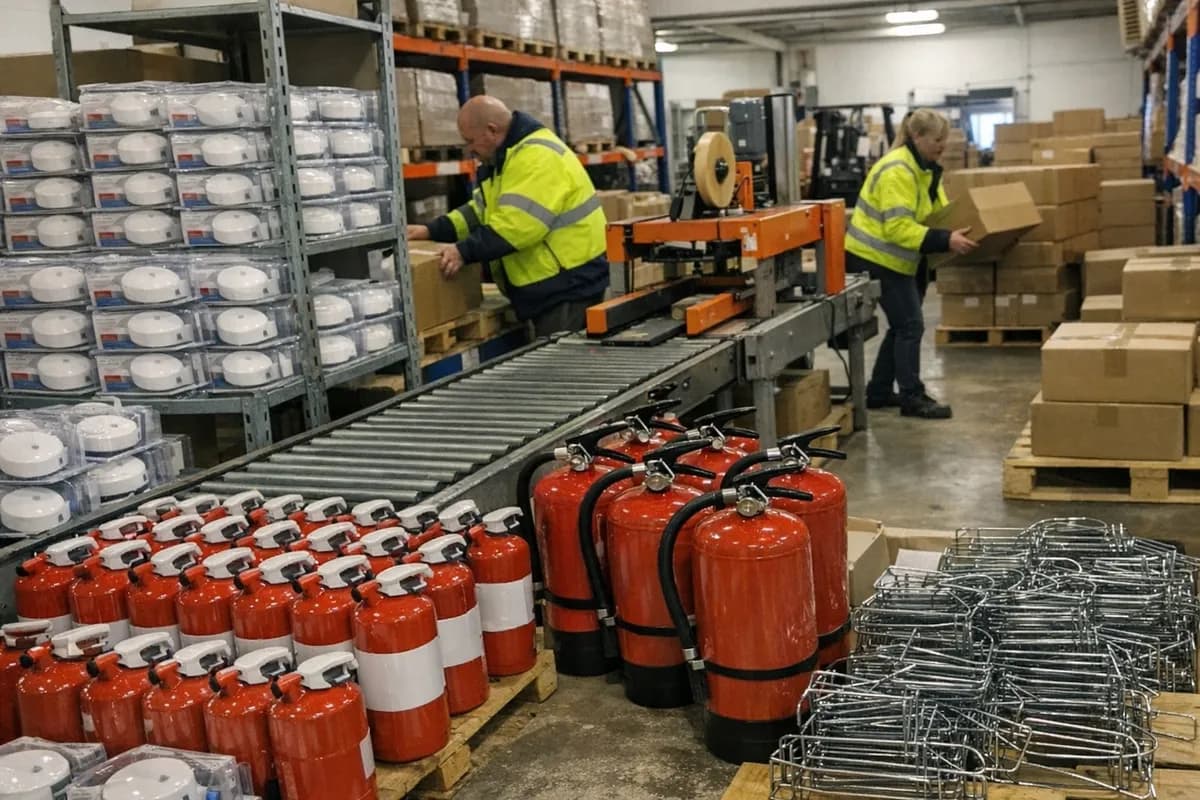
UN 1044 Fire Extinguishers Under ADR: Buyer Guide
Shipping fire extinguishers under ADR requires UN 1044 checks, correct Incoterms, and SKU-level documents before you request a quote.
By Mattias EkstrandHead of Product and Trade SupplyFire protection engineer with fourteen years specifying fire safety equipment for EU trade buyers and procurement teams.
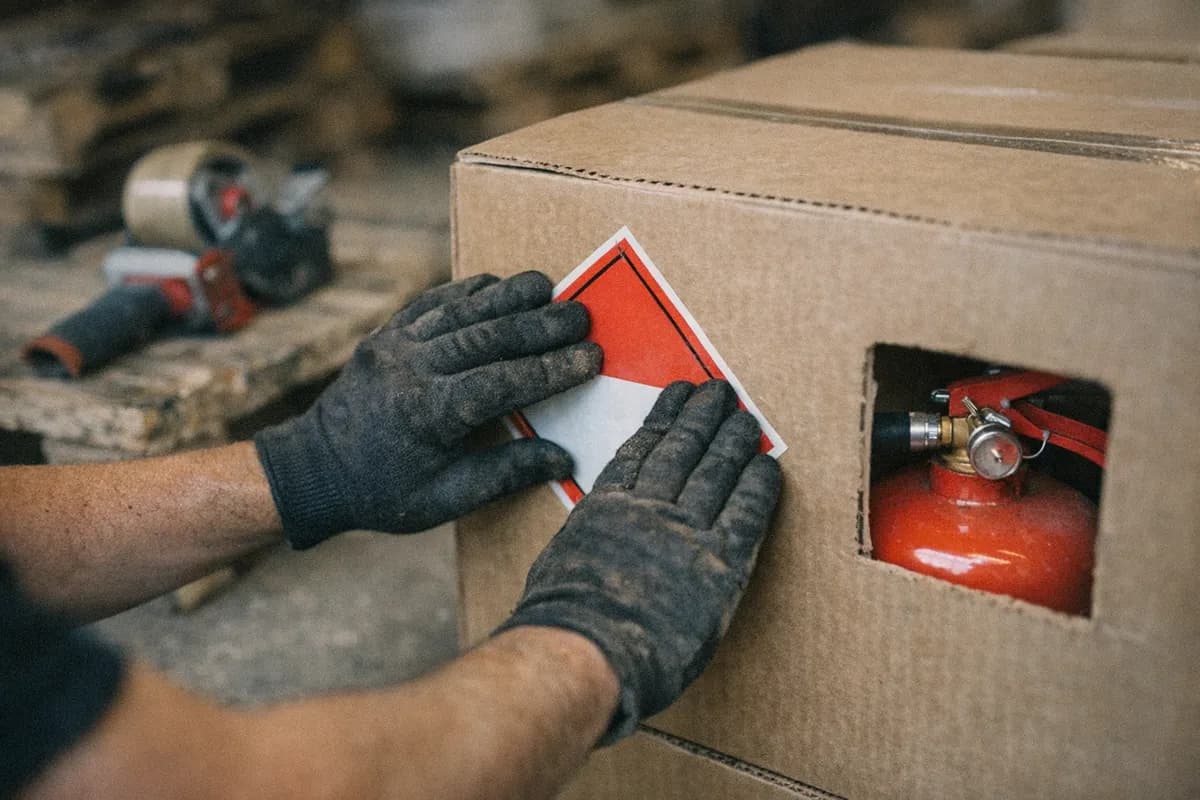
Shipping fire extinguishers under ADR is a logistics check as much as a product check. A buyer has to separate the transport description, the customs code, the extinguisher standard, and the Incoterm before comparing offers.
We supply B2B fire extinguisher orders from our European range under EXW, FCA, or DAP. This guide explains how we treat UN 1044 in the buying process, what to specify on the RFQ, and where ADR planning changes the quote discussion.
What does UN 1044 mean for fire extinguisher shipments?
UN 1044 is the dangerous-goods identifier normally used for fire extinguishers in transport. UNECE’s ADR 2025, Table A, lists UN 1044 with the proper shipping name FIRE EXTINGUISHERS and Class 2.
That does not replace the commercial product description. A customs file, ERP item, or resale catalogue still needs the extinguisher type, capacity, agent, article number, standard claim, and HS code. For our extinguisher range, the product facts use HS code 8424.10. UN 1044 tells the carrier how to handle the dangerous-goods transport entry; HS 8424.10 tells customs what the goods are.
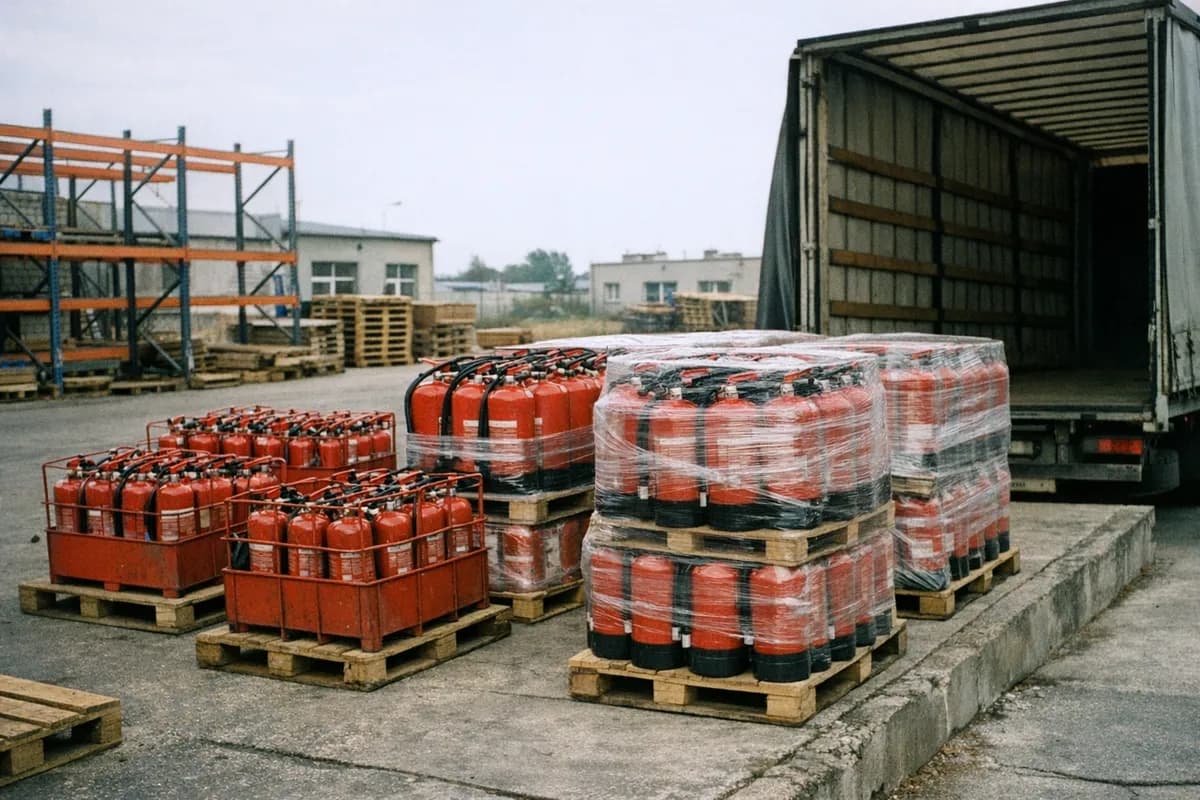
ADR details should be checked shipment by shipment because the transport unit, packaging, mixed load, destination, and carrier acceptance can change the operational route. UNECE’s ADR 2025 includes Special Provision 225 and Special Provision 594 for UN 1044 fire extinguishers, so buyers should ask their forwarder which provisions they will apply before collection is booked. We do not recommend leaving that decision until the truck is at the loading point.
For a wholesale buyer, the practical question is simple: will the carrier accept the order as presented, with the selected Incoterm and collection point? If the answer is not confirmed in writing, the purchase order is not yet logistics-ready.
Which extinguisher specifications affect ADR planning?
The main specifications for ADR planning are gross weight, extinguisher type, agent, article number, standard claim, and packing or handling requirement requested by the carrier. The fire rating matters for the buyer’s end use, but the carrier is usually focused on the transport classification and acceptance conditions.
Here are typical product lines where the logistics and sales specification need to stay aligned:
| Product line | Example SKU | Buyer-use specification | Shipping-relevant product facts |
|---|---|---|---|
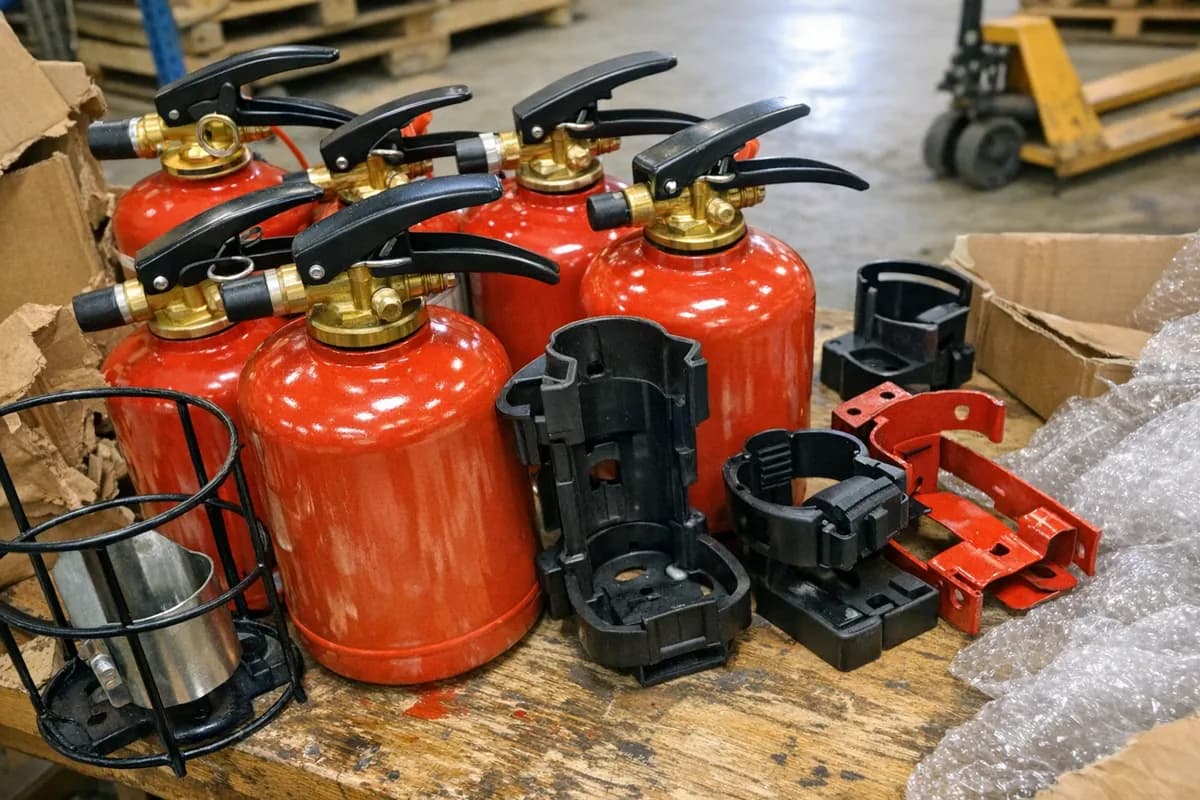
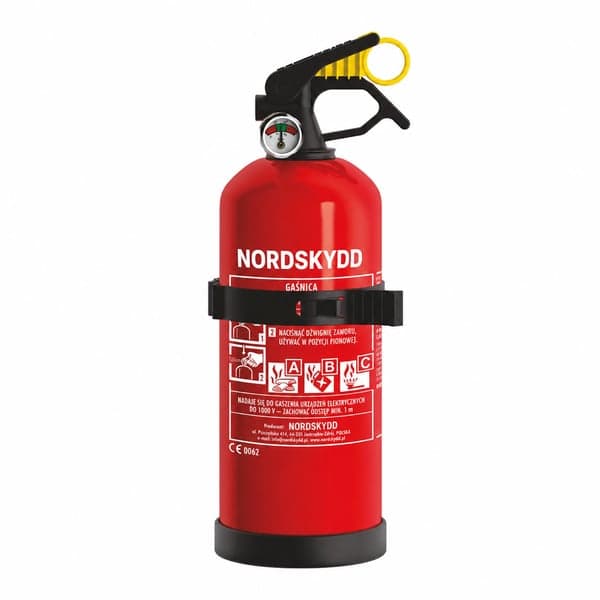
| Vehicle powder extinguisher | 1 kg ABC vehicle extinguisher | 1 kg ABC dry powder, 8A 34B C, EN 3-7, CNBOP-PIB approved | Gross weight 1.7 kg, plastic vehicle hanger included, HS 8424.10 |
| Workplace powder extinguisher | 6 kg ABC powder extinguisher | 6 kg ABC dry powder, 55A 233B C, EN 3-7 | Gross weight 9.3 kg, metal hook wall hanger included, HS 8424.10 |
| CO2 extinguisher | 5 kg CO₂ extinguisher | 5 kg CO2, 89B, EN 3-7, CNBOP-PIB approved, UDT permit | Gross weight 14 kg, disc wall hanger with strap included, HS 8424.10 |
| ABF liquid extinguisher | 2 L ABF extinguisher | 2 L ABF liquid, 8A 55B 40F, EN 3-7, CNBOP-PIB approved | Gross weight 3.5 kg, red metal basket wall hanger included, HS 8424.10 |
Related equipment
1 kg ABC vehicle extinguisher
Stored-pressure 1 kg ABC powder cylinder rated 8A 34B C with a plastic vehicle hanger for passenger cars, camper vans, and small boats where a 1.7 kg unit must fit in a footwell or boot.
CE · EN 3-7 · CNBOP-PIB · ISO 9001
View specificationsThe table shows why one line called “fire extinguishers” is not enough for a freight booking. A 1 kg vehicle unit and a 5 kg CO2 cylinder may both fall under the same customs heading in our product facts, but the gross weight, mounting hardware, end-use documentation, and carton planning are different.
For product selection before the logistics step, start with our portable fire extinguishers range and shortlist by risk class, rating, and standard. If EN 3-7 compliance is a tender requirement, verify the exact SKU against the product facts rather than assuming all extinguishers in a family carry the same approvals. We keep a separate guide on verifying EN 3 fire extinguishers for that document check.
What Incoterm should a buyer use for ADR freight?
Choose the Incoterm after you know who will control the dangerous-goods carrier booking. We offer extinguisher orders under EXW, FCA, or DAP, and each option changes who must coordinate the road transport acceptance.
Under EXW, the buyer has the most control over the forwarder. That can suit importers with an existing ADR-capable collection network, but it also means the buyer should align the carrier’s requirements before pickup. If the carrier asks for a specific transport description, packaging confirmation, or loading document, that request should be raised before the order is released.
Under FCA, handover is still early in the route, but the named place and carrier appointment need to be precise. This is often cleaner than EXW when the buyer wants a defined delivery point to its nominated carrier. ICC’s Incoterms 2020 rules define FCA as Free Carrier, so the named place is not a minor detail in the purchase order.
Under DAP, the quote includes delivery to the named destination. That can reduce the buyer’s freight administration, but it requires a complete receiving address, site restrictions, booking windows, and any customer-side dangerous-goods receiving rule. ICC’s Incoterms 2020 rules define DAP as Delivered at Place, which means we need the named place before freight can be priced.
If you already have a route or carrier instruction, send it with your RFQ through our contact page. We can then quote the product basket against the same Incoterm boundary you are using internally.
What is the MOQ and price context for UN 1044 extinguishers?
Our published product facts do not set a fixed MOQ for the extinguisher lines, so we quote after SKU mix, volume, Incoterm, and destination are confirmed. Price is driven by article selection, extinguisher size, agent type, certification set, mounting hardware, packing requirement, Incoterm, and freight route.
Do not compare a vehicle extinguisher, a 6 kg powder unit, a CO2 unit, and an ABF liquid unit only by cylinder count. The gross weight changes pallet planning and freight cost. The certification set changes the product line. The Incoterm changes where the seller’s cost stops and where the buyer’s freight responsibility begins.
There is no useful spot benchmark for manufactured extinguisher pricing that we would quote in an article. A current quotation is built from the confirmed SKU list, order volume, destination, and delivery term. Where ADR handling affects carrier choice or route availability, that becomes part of the landed-cost discussion rather than a separate afterthought.
For a quote, send article numbers or product links, quantities, destination country, named place, and preferred Incoterm. If your forwarder has already asked for UN 1044 wording or ADR confirmation, include that message in the same RFQ so the commercial and logistics review happen together.
How should a buyer place an ADR-ready extinguisher order?
Place the order only after the product specification and carrier acceptance route are both clear. The fastest buying sequence is: select SKUs, confirm standards and ratings, choose Incoterm, check ADR handling with the forwarder, then issue the purchase order.
Start with the end use. Vehicle programmes may need compact units and vehicle hangers. Workshops may need ABC powder with higher ratings. Kitchens may need F-rated ABF or water-mist products. Electronics areas may need CO2 where powder residue is not acceptable. The transport entry does not decide those choices; the site risk and resale requirement do.
Next, check the document level. If the customer asks for EN 3-7, CNBOP-PIB, CE, ISO 9001, PED 2014/68/EU, or a UDT permit, confirm the requirement at SKU level. Our range includes products with different standard statements, including EN 3-7 extinguishers and supplementary domestic equipment that is explicitly not EN 3-7.
Then align the logistics wording. The purchase order should not say only “fire extinguishers.” It should include the product article numbers, quantities, Incoterm, destination, and any ADR instruction from the carrier. For background on the transport side, see our guide to EU ADR shipping requirements for fire extinguishers.
The final check is internal consistency. The invoice description, packing list, customs heading, product documentation, and carrier booking should describe the same goods. If one file says HS 8424.10 fire extinguishers and another file asks the carrier to handle UN 1044 FIRE EXTINGUISHERS, those are not conflicting terms; they serve different systems. Problems arise when the SKU, quantity, or Incoterm changes after the carrier has accepted the load.
A clean RFQ gives us the practical information needed to quote without guessing. Send your SKU shortlist, order volume, destination, and preferred EXW, FCA, or DAP term via our contact page, and include any ADR wording your forwarder has requested.