ABC Powder vs Foam Fire Extinguishers for EU Buyers
ABC Powder vs Foam Fire Extinguishers for EU trade buyers shows when to stock powder and when foam gives a cleaner resale fit.
By Mattias EkstrandHead of Product and Trade SupplyFire protection engineer with fourteen years specifying fire safety equipment for EU trade buyers and procurement teams.
EU buyers asking us to compare ABC powder vs foam fire extinguishers are usually making a stocking decision, not a theory decision. The right answer depends on resale channel, application, certification wording, storage temperature, and the type of end user your customer serves.
In our range, “foam” can mean EN 3-7 liquid AB or ABF extinguishers, fluorine-free AB liquid units, or VER-DIS foam units for lithium-ion battery risk. We separate those from ABC dry powder because the buying logic is different: powder gives wide fire-rating cover and cold tolerance, while foam and liquid units are chosen when residue, kitchen risk, office use, or a specific tender wording matters.
Which extinguisher type should an EU trade buyer stock?
Most EU trade buyers should stock ABC powder for broad workplace, vehicle, plant-room, and cold-storage demand, then add foam or liquid lines where the resale channel asks for cleaner discharge or kitchen-specific cover. A single “best” extinguisher type rarely fits every account.
ABC powder is the safer base range when the buyer needs C-rated cover in the product description, wants a compact vehicle unit, or sells into unheated areas. Our ABC powder models include 1 kg, 2 kg, 4 kg, 6 kg, 9 kg, and 12 kg options, so an importer can build a range from passenger-car fitment to general commercial cover without changing agent family.
Foam and liquid extinguishers are more selective. Buyers choose them when powder contamination would be a problem in offices, homes, food-adjacent spaces, retail interiors, or technical rooms. They also give a clearer story where a buyer wants ABF kitchen cover, fluorine-free AB foam solution, or a Li-ion focused VER-DIS product. If your customer base includes property managers and housing providers, foam or liquid lines often sit beside powder rather than replacing it.
For a first assortment, we normally suggest starting with the use cases rather than the litre or kilogram size. Vehicle and cold-area demand points toward powder. Kitchens and domestic projects point toward ABF or water-mist options. E-bike, scooter, laptop, and battery-service areas may justify a VER-DIS Li-Ion foam SKU, but buyers need to read the standard statement carefully because those models are not all EN 3-7.
What specification differences should buyers check?
Check the fire rating, EN 3-7 status, operating temperature, electrical safety statement, mounting format, warranty period, article number, Incoterm, and HS code before comparing prices. The same cylinder size can sell into different channels if one unit is EN 3-7 and another is supplementary or specialist equipment.
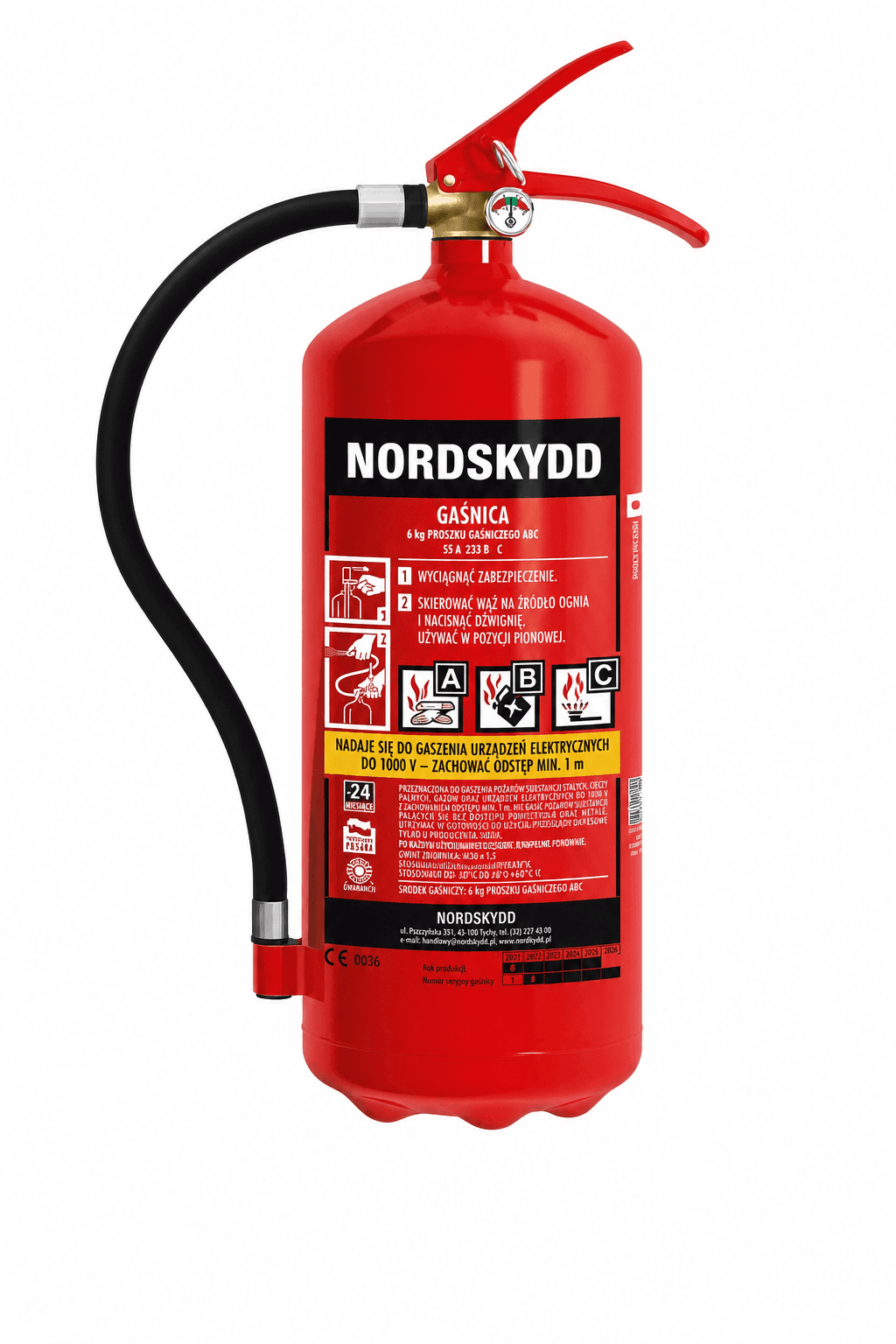
For ABC powder, the key sourcing advantage is rating breadth. The ABC Powder Fire Extinguisher, 6 kg is a Poland-manufactured unit, article NV-FE-106, with 55A 233B C rating, EN 3-7 standard, CE, EN 3-7, CNBOP-PIB and ISO 9001 certifications, -30 °C to +60 °C operating temperature, live equipment safety to 1000 V, metal hook wall hanger, 2-year warranty from date of manufacture, HS code 8424.10, and EXW, FCA, or DAP quotation terms.
Related equipment
ABC Powder Fire Extinguisher, 6 kg
Stored-pressure 6 kg ABC powder extinguisher rated 55A 233B C, supplied with a wall hanger for boiler rooms, garages, workshops, plant areas, and general commercial applications.
CE · EN 3-7 · CNBOP-PIB · ISO 9001
View specificationsFor foam and liquid extinguishers, buyers must be more precise about the agent and the standard claim. The Liquid Fire Extinguisher, 6 L AB Fluorine-Free uses 6 L FFX150 fluorine-free AB foam solution and is rated 27A 144B under EN 3-7. The Liquid Fire Extinguisher, 2 L ABF is rated 8A 55B 40F under EN 3-7, which makes it a different stocking decision from a general AB foam product.
VER-DIS Li-Ion foam is another branch. The Foam Fire Extinguisher, 6 L VER-DIS Li-Ion is rated 21A, uses VERDIS medium, carries CE, CNBOP-PIB, ISO 9001 and PED 2014/68/EU in the product facts, and is stated as not EN 3-7. That distinction matters in tenders where EN 3-7 wording is mandatory.
If your shortlist is still open, review the full portable fire extinguishers range first, then send us the target country and application mix through our contact page so we can quote the right SKU set.
When does ABC powder make commercial sense?
ABC powder makes commercial sense when the buyer needs wide A, B, and C rating coverage, cold operating temperature, and compact vehicle or workshop SKUs. It is usually the practical baseline for importers serving mixed industrial, automotive, and general safety channels.
For vehicle trade, the ABC Powder Fire Extinguisher, 1 kg, with Vehicle Hanger gives a 1.7 kg gross-weight unit rated 8A 34B C with a plastic vehicle hanger. That type of SKU fits motor trade, fleet operators, camper vans, and boat accessory channels where the product has to mount securely and fit in a tight cabin or boot space.
For building and workshop trade, the 4 kg and 6 kg ABC powder units are often easier to position than very small cylinders because the fire ratings are higher. Our 4 kg ABC model is rated 27A 144B C, while the 6 kg model is rated 55A 233B C. Buyers stocking plant-room, garage, warehouse, and workshop supplies usually compare those two sizes before adding 9 kg or 12 kg units for larger points.
Temperature is a practical separator. Our ABC powder range listed here operates down to -30 °C, while most foam and liquid lines in the product facts start at +5 °C or 0 °C depending on model. If your customers install extinguishers in unheated vans, sheds, outdoor cabinets, or cold warehouses, that difference should be checked before the purchase order is issued.
The trade-off is residue. Powder can be the correct fire-cover choice but the wrong clean-up choice. If your customer sells into offices, residential interiors, retail counters, or electronics-adjacent rooms, stock ABC powder for required cover but offer a foam, liquid, water-mist, or CO2 alternative where residue is the objection.
When does foam or liquid make commercial sense?
Foam and liquid extinguishers make commercial sense when the application needs a cleaner discharge profile, kitchen capability, fluorine-free agent wording, or a Li-ion focused product story. They are not interchangeable, so the buyer should specify AB, ABF, fluorine-free AB, or VER-DIS rather than just “foam.”
ABF liquid units are useful for buyers serving kitchens, homes, cafés, housing providers, and mixed-use properties. Our 2 L ABF model is EN 3-7 rated 8A 55B 40F, while the 6 L ABF model is rated 21A 233B 40F. If the end user wants one product family for offices and kitchen-adjacent spaces, ABF can simplify the resale offer.
Fluorine-free AB liquid is chosen when the specification asks for a foam solution without PFAS-type additives or when a buyer’s internal policy excludes fluorinated agents. Our 6 L fluorine-free AB model is rated 27A 144B and the 9 L model is rated 34A 183B, both under EN 3-7. That gives a buyer a clear tender response when “fluorine-free” is written into the procurement text.
VER-DIS Li-Ion foam is a specialist stock line. Our 2 L, 6 L, and 9 L VER-DIS units are aimed at lithium-ion battery risk positions such as laptops, tablets, powerbanks, scooters, e-bikes, and cordless equipment, depending on unit size. They carry CNBOP-PIB approval in the product facts, but the 2 L and 9 L product facts state not EN 3-7, and the 6 L facts do not claim EN 3-7. Do not substitute them automatically for EN 3-7 foam tenders.
The temperature point still applies. Most foam and liquid models in this comparison operate from +5 °C to +60 °C, while the fluorine-free AB units operate from 0 °C to +60 °C. That is acceptable for many indoor projects, but it can disqualify a foam SKU for cold storage, vehicles, or unheated external points.
What is the MOQ and price context for wholesale orders?
Our published product facts do not set a fixed MOQ for these extinguisher lines, so we quote after the SKU mix, order volume, Incoterm, and destination are known. For current pricing, send article numbers, quantities, delivery country, and preferred EXW, FCA, or DAP term.
Price is driven by agent type, capacity, rating, certification set, mounting hardware, gross weight, pallet economics, and transport boundary. A 1 kg ABC car extinguisher, a 6 L fluorine-free AB unit, and a 9 L VER-DIS Li-Ion foam extinguisher do not cost out the same way because the cylinder, medium, approvals, and freight weight differ.
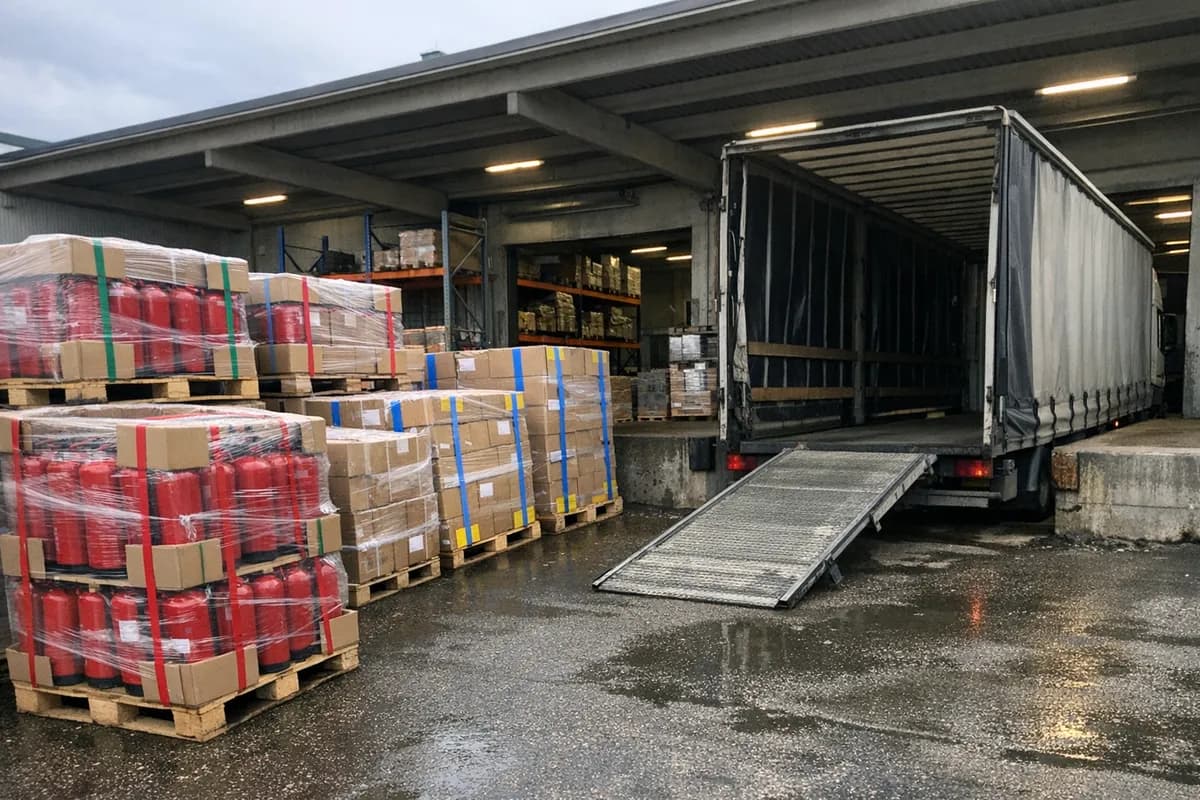
Incoterm selection affects the quote:
- EXW suits buyers who control collection with their own forwarder.
- FCA suits buyers who want handover at an agreed named place.
- DAP suits buyers who want us to quote delivery to the named destination.
All extinguisher SKUs discussed here use HS code 8424.10 in the product facts. If your purchasing system needs customs data, put that code in the RFQ so the quote, order confirmation, and freight file stay aligned. For a firm offer, send the volume and destination via our contact page.
How should buyers specify and place the order?
Run the order in this sequence: application, extinguisher type, certification requirement, SKU, Incoterm, freight check, then purchase order. That order prevents a common problem where the buyer agrees a price before confirming that the selected product fits the tender or freight route.
Start with the resale channel. Vehicle equipment buyers usually need compact powder units with vehicle hangers. Workplace distributors usually need EN 3-7 powder, foam, CO2, or water-mist products by rating and size. Home safety channels may need domestic liquid extinguishers or bundled kits, but those are not always EN 3-7, so the sales description must match the product facts.
Then fix the compliance language. If your customer’s tender says EN 3-7, do not assume a CNBOP-PIB approved specialist foam product satisfies the same line item. If the tender asks for fluorine-free foam, do not substitute a standard AFFF model. If the tender is for Li-ion risk, check whether the buyer wants a specialist VER-DIS product or a standard extinguisher family.
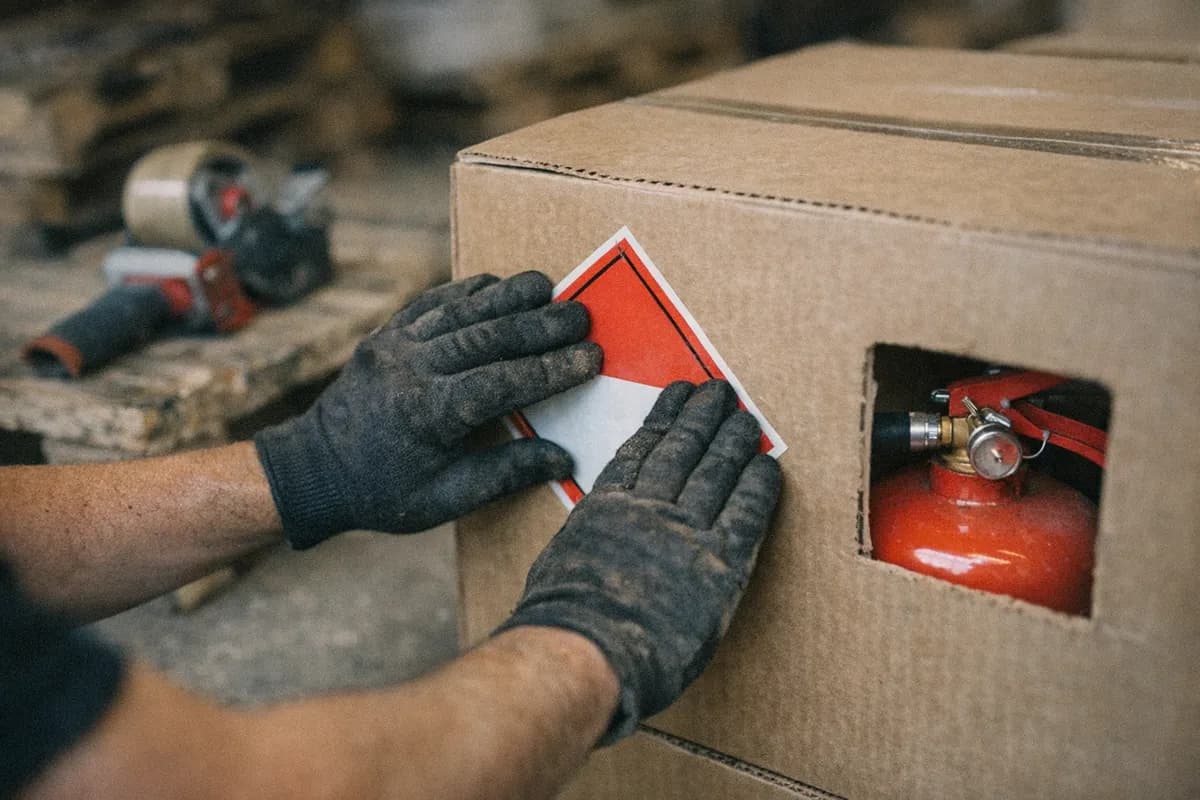
Freight should be checked before collection is booked. Charged fire extinguishers can require dangerous-goods handling decisions in EU road freight, and the carrier may ask for product and packing details before accepting the load. Our EU ADR shipping requirements for fire extinguishers guide explains the UN 1044 and Special Provision 594 checks that often come up in wholesale shipments.
The best stocking answer is usually not “ABC or foam.” It is ABC powder as the broad base, then selected foam or liquid lines for indoor, kitchen, fluorine-free, or Li-ion demand. Once your shortlist is fixed, we can quote against exact article numbers rather than a generic extinguisher description.