Evaluating EN 3-7 Fire Extinguishers Wholesale
Learn how to verify EN 3-7 conformity when sourcing fire extinguishers wholesale, with SKU checks, documents, MOQ and quote steps.
By Mattias EkstrandHead of Product and Trade SupplyFire protection engineer with fourteen years specifying fire safety equipment for EU trade buyers and procurement teams.
Wholesale buyers cannot treat “EN 3-7” as a generic catalogue word. The conformity check has to reach the exact model, label, certificate set, fire rating, mounting format, and commercial line on the purchase order.
We supply portable fire extinguishers from Sweden to B2B buyers who need clear SKU-level information before they commit to import, resale, project supply, or fleet procurement. This guide sets out the sourcing workflow we use when a buyer asks whether a wholesale extinguisher order is really aligned with EN 3-7.
What does EN 3-7 conformity mean for wholesale fire extinguishers?
EN 3-7 conformity means the specific portable fire extinguisher model is claimed and documented against EN 3-7, not just that the supplier sells extinguishers. CEN publishes EN 3-7:2004+A1:2007 for portable fire extinguishers under the title “Characteristics, performance requirements and test methods.”
For a procurement team, the practical issue is traceability. The product name, fire rating, agent type, capacity, and certification claim should all point to the same article. A certificate or catalogue page that refers to a different model is not enough for a tender file.
We advise buyers to make EN 3-7 a line-level requirement in the RFQ. Do not write only “fire extinguishers to EU standard” if the project specification requires EN 3-7. Write the extinguisher type, capacity, fire rating if known, and whether a local approval such as CNBOP-PIB is required for the resale or project market.
A common procurement error is mixing EN 3-7 workplace extinguishers with domestic supplementary extinguishers in the same approval assumption. In our range, the red and white 2 L domestic liquid extinguishers are listed as supplementary domestic equipment and not EN 3-7. They may be valid for the right residential channel, but they should not be placed into a tender that states EN 3-7 portable extinguishers.
Which documents should prove EN 3-7 conformity?
Ask for documents that identify the exact model and article, then compare them with the label and order line. The document pack should support the SKU being purchased, not only the product family.
For an EN 3-7 sourcing file, we recommend this sequence:
- Start with the product page or specification sheet and record the article number.
- Confirm the fire rating shown on the product, such as 55A 233B C or 8A 55B 40F.
- Check whether EN 3-7 is stated for that article.
- Confirm whether CE, CNBOP-PIB, ISO 9001, or other certifications are claimed for that same SKU.
- Keep the Incoterm and HS code on the same purchase file so the commercial and compliance records match.
CE marking should not be treated as a substitute for EN 3-7. Several safety products can carry CE while being outside EN 3-7 because they fall into a different product type or are supplementary equipment. The same point applies to CNBOP-PIB approval: it is useful where required, but it is SKU-specific in our range.
If your internal team is still building the shortlist, start with our portable fire extinguishers range and mark which products must be EN 3-7 before you request a quote.
Which EN 3-7 extinguisher types should a buyer specify?
Specify the extinguisher by fire risk, agent, rating, size, mounting, and operating temperature. EN 3-7 status is one part of the selection, but it does not decide whether powder, liquid, water mist, or CO2 is the right agent for the end use.
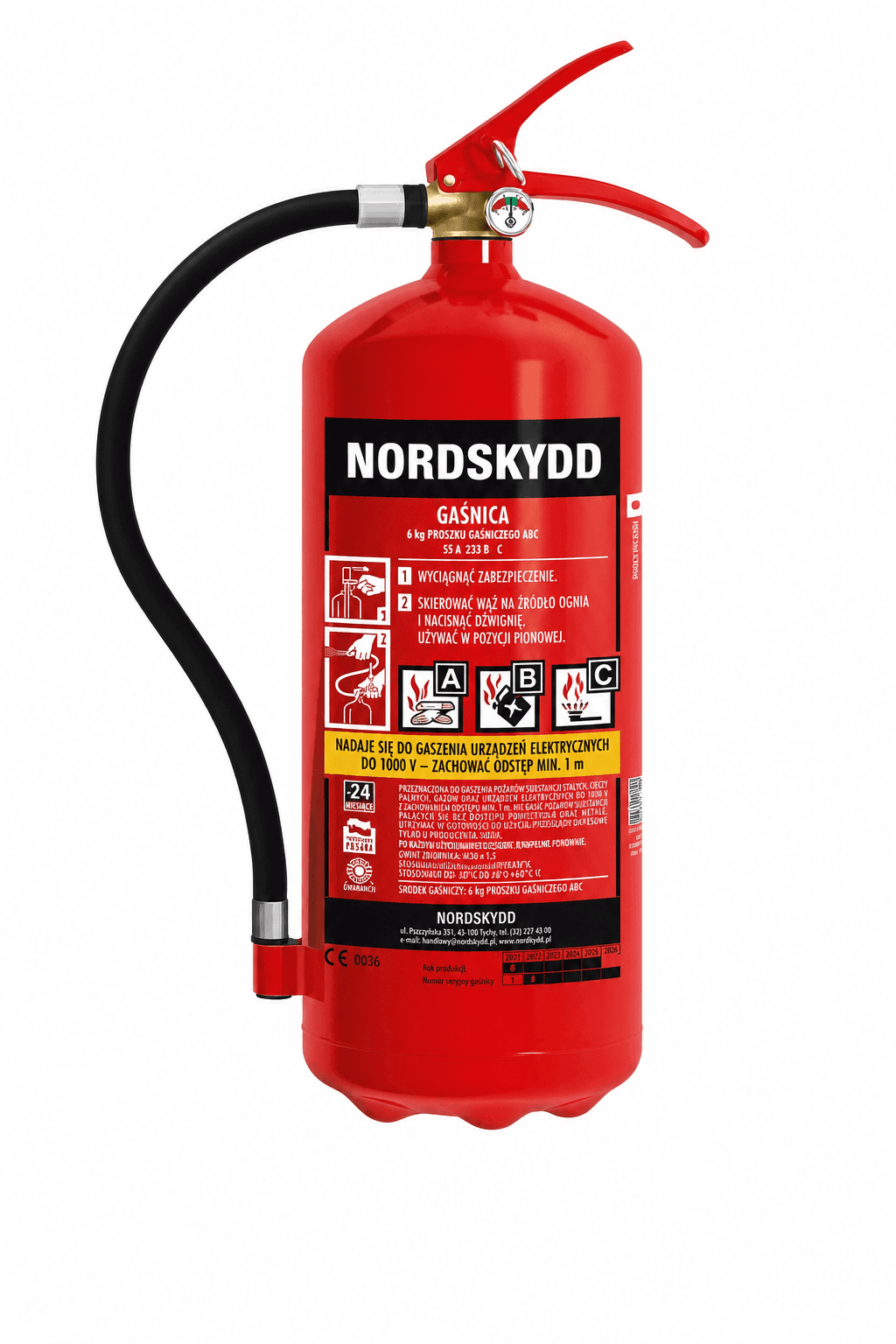
For a general commercial ABC powder example, our ABC Powder Fire Extinguisher, 6 kg has article number NV-FE-106, 6 kg ABC dry powder capacity, 55A 233B C fire rating, EN 3-7 standard, operating temperature from -30 °C to +60 °C, live equipment safety to 1000 V, 495 mm height, 160 mm cylinder diameter, 9.3 kg gross weight, metal hook wall hanger, 2-year warranty from date of manufacture, manufacture in Poland, CE, EN 3-7, CNBOP-PIB, and ISO 9001 certifications, HS code 8424.10, and EXW, FCA, or DAP Incoterms.
Related equipment
ABC Powder Fire Extinguisher, 6 kg
Stored-pressure 6 kg ABC powder extinguisher rated 55A 233B C, supplied with a wall hanger for boiler rooms, garages, workshops, plant areas, and general commercial applications.
CE · EN 3-7 · CNBOP-PIB · ISO 9001
View specificationsFor smaller vehicle or fleet requirements, the ABC Powder Fire Extinguisher, 1 kg, with Vehicle Hanger is also listed to EN 3-7 and has a plastic vehicle hanger. If the buyer wants a BC powder vehicle unit instead, the BC Powder Fire Extinguisher, 1 kg, with Vehicle Hanger is a separate article and should not be treated as the same specification.
For kitchens, offices, and living spaces where powder residue is a concern, buyers may compare ABF liquid or water mist units. The Liquid Fire Extinguisher, 2 L ABF is listed to EN 3-7 with an 8A 55B 40F rating. For a larger fluorine-free option, the Liquid Fire Extinguisher, 6 L AB Fluorine-Free is listed to EN 3-7 with a fluorine-free AB foam solution.
For electronics rooms, a CO2 unit may be specified because powder residue is usually unwanted around cabinets and equipment. Our 2 kg and 5 kg CO2 fire extinguishers with UDT permits are listed as EN 3-7 products, but the buyer should still confirm the article number and rating before ordering.
Send us your intended application, target market, and shortlist via our contact page if you want us to return the matching article numbers before a formal quotation.
What is the MOQ and price context for EN 3-7 fire extinguishers?
Our published product facts do not state a fixed MOQ for EN 3-7 fire extinguishers. We quote after the buyer confirms article numbers, quantities, Incoterm, and destination.
Price is driven by the selected model, capacity, extinguishing medium, certification set, hanger type, order volume, freight boundary, and delivery country. A 1 kg vehicle powder extinguisher, a 6 L fluorine-free liquid extinguisher, and a 5 kg CO2 unit do not have the same cost base or logistics profile.
The Incoterm changes what is included in the quote. Under EXW, the buyer arranges collection from the agreed location. Under FCA, handover to the carrier is defined at the named place. Under DAP, we need the delivery address and any receiving constraints so the delivered price reflects the actual lane.
There is no useful daily terminal benchmark for finished portable fire extinguishers that a buyer can use like a metal exchange reference. For sourcing decisions, the better comparison is a controlled RFQ: same SKU, same quantity, same Incoterm, same destination, same document requirement.
For a current wholesale quote, send article numbers, quantities, delivery country, and preferred EXW, FCA, or DAP term through our contact page.
How should EN 3-7 claims be checked when goods arrive?
Check the received goods against the purchase order, not only against the supplier invoice. The receipt inspection should confirm that the physical extinguisher label matches the ordered article and the EN 3-7 claim.
A workable goods-in process is simple. Photograph one unit from each SKU before it enters resale stock. Record the article number, capacity, fire rating, visible certification marks, and mounting hardware. Check that the pressure gauge or discharge equipment is not damaged and that the hanger supplied matches the order line.
For mixed orders, separate EN 3-7 extinguishers from supplementary domestic equipment at receipt. This prevents a warehouse from sending a non-EN 3-7 domestic unit into a project order that requires EN 3-7. The distinction matters because some products may look similar to a non-technical picker, especially when they share a red cylinder format.
Also check the temperature range if the extinguishers will be sold for vehicles, unheated stores, garages, or outdoor points. A powder extinguisher with a -30 °C lower operating limit and a liquid extinguisher with a +5 °C lower operating limit serve different use cases. EN 3-7 status does not remove the need to match operating temperature to the buyer’s market.
Keep the receipt photos, product documents, and invoice together in the order file. If a downstream customer later asks for proof, the procurement team can show the exact SKU supplied rather than reopening the whole sourcing chain.
How does EN 3-7 conformity fit with freight and customs?
EN 3-7 conformity is a product compliance question, while freight and customs are separate checks. For our extinguisher product facts, the HS code is 8424.10 and the available Incoterms are EXW, FCA, or DAP.
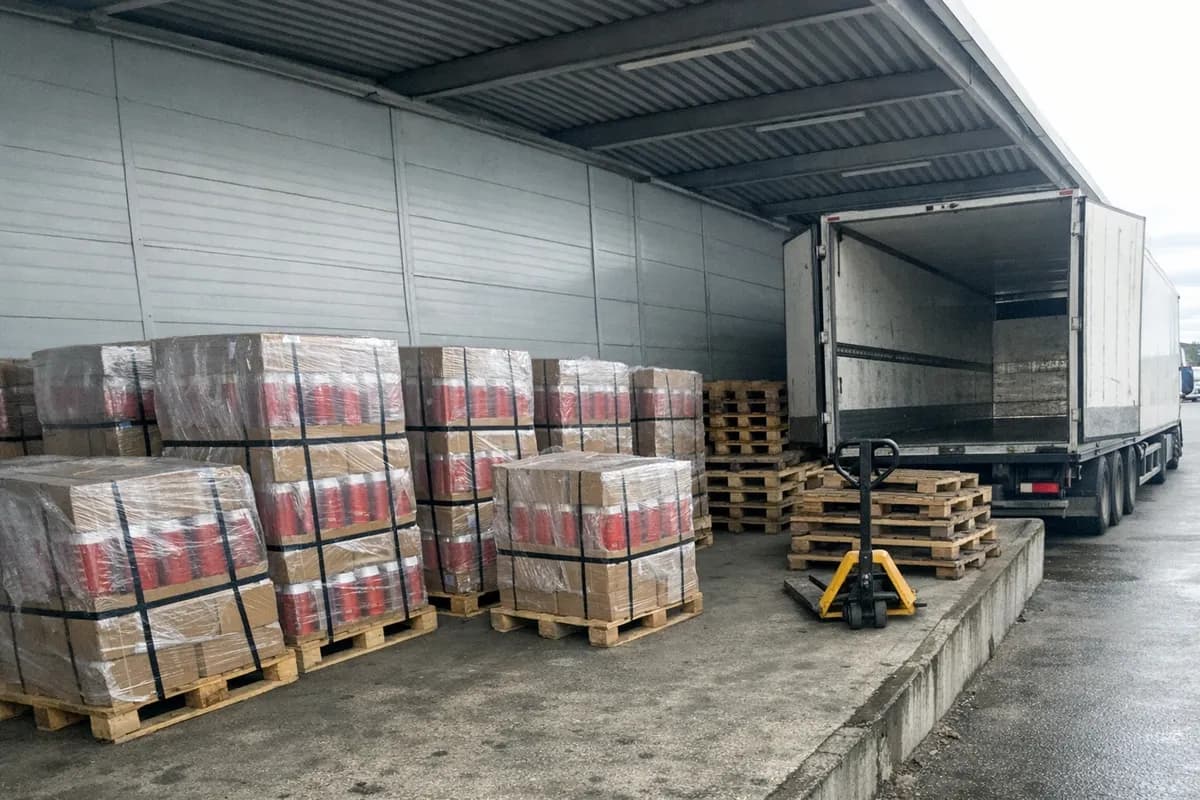
Charged portable fire extinguishers may also need transport classification review. That is not solved by EN 3-7 documentation. A compliant extinguisher still has to be accepted by the carrier under the correct transport procedure.
For EU road freight, buyers often need to discuss ADR handling with the forwarder before collection. If you are arranging transport yourself under EXW or FCA, make that check before the pickup slot is booked. We cover the transport side separately in our guide to EU ADR shipping requirements for fire extinguishers.
The cleanest wholesale order is built in this order: fix the end-use specification, confirm EN 3-7 status by SKU, agree the document pack, choose the Incoterm, then book freight. That sequence gives procurement, compliance, warehouse, and the carrier the same reference point before money and stock are committed.