Buying Fire Extinguishers Wholesale in Europe: MOQ and Delivery
Buying Fire Extinguishers Wholesale in Europe requires clear SKU, MOQ, pallet and Incoterm checks before a buyer can compare quotes.
By Mattias EkstrandHead of Product and Trade SupplyFire protection engineer with fourteen years specifying fire safety equipment for EU trade buyers and procurement teams.
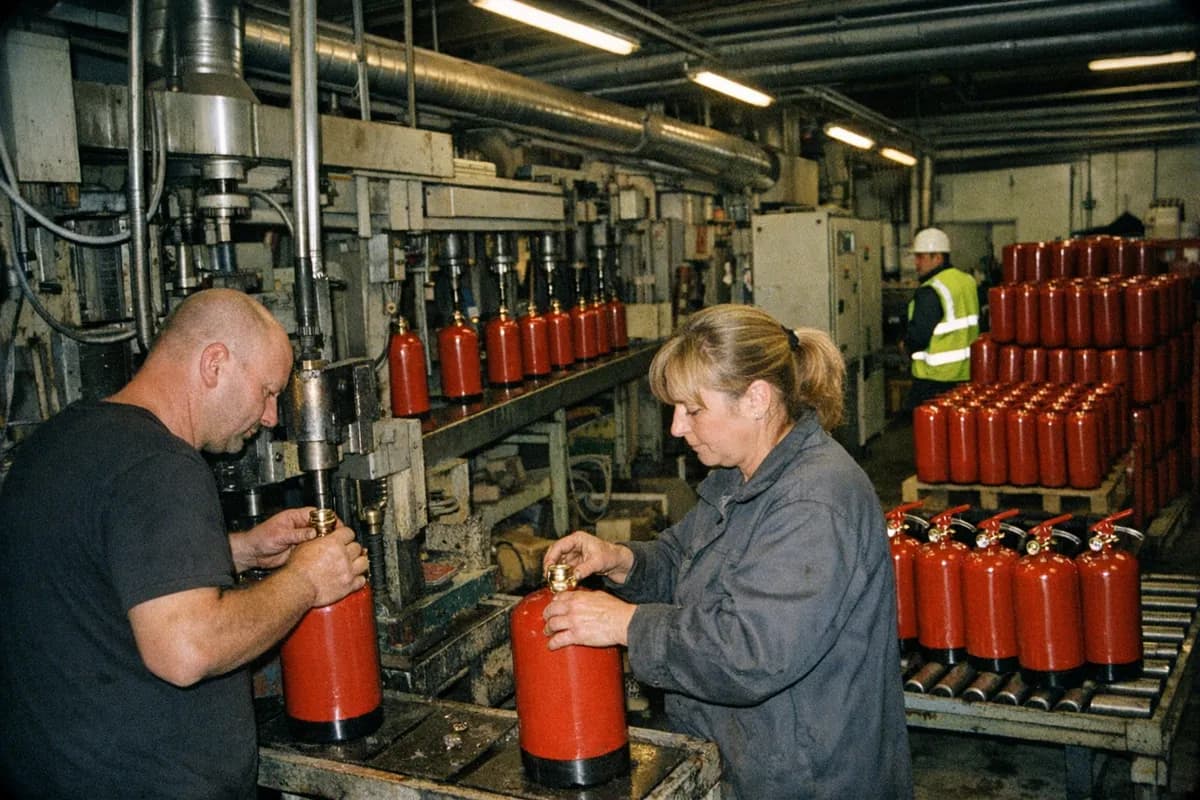
Buying fire extinguishers wholesale in Europe is a specification and logistics exercise before it is a unit-price comparison. A buyer has to decide the extinguisher type, rating, certification requirement, bracket, destination country, Incoterm and order quantity before a supplier can confirm a useful quote.
We supply B2B extinguisher orders from our European range under EXW, FCA or DAP. Our published product facts do not state fixed MOQ, pallet quantities or standard lead times, so we treat those as quote-stage items after the SKU mix and destination are clear.
What should a buyer specify before asking for a wholesale quote?
Specify the extinguisher by use case, rating and document requirement before asking for price. A request for “6 kg extinguisher” is not enough because powder, liquid, foam, CO2 and water-mist products solve different purchasing problems.
Start with the location. Workshops, garages and plant rooms often need broad A, B and C cover. Kitchens and staff food areas may need F-rated stock. Server rooms, electrical cabinets and equipment rooms usually require a residue check because powder discharge can create a clean-up and equipment problem. Vehicle programmes need bracket format, gross weight and cylinder diameter checked against the installation point.
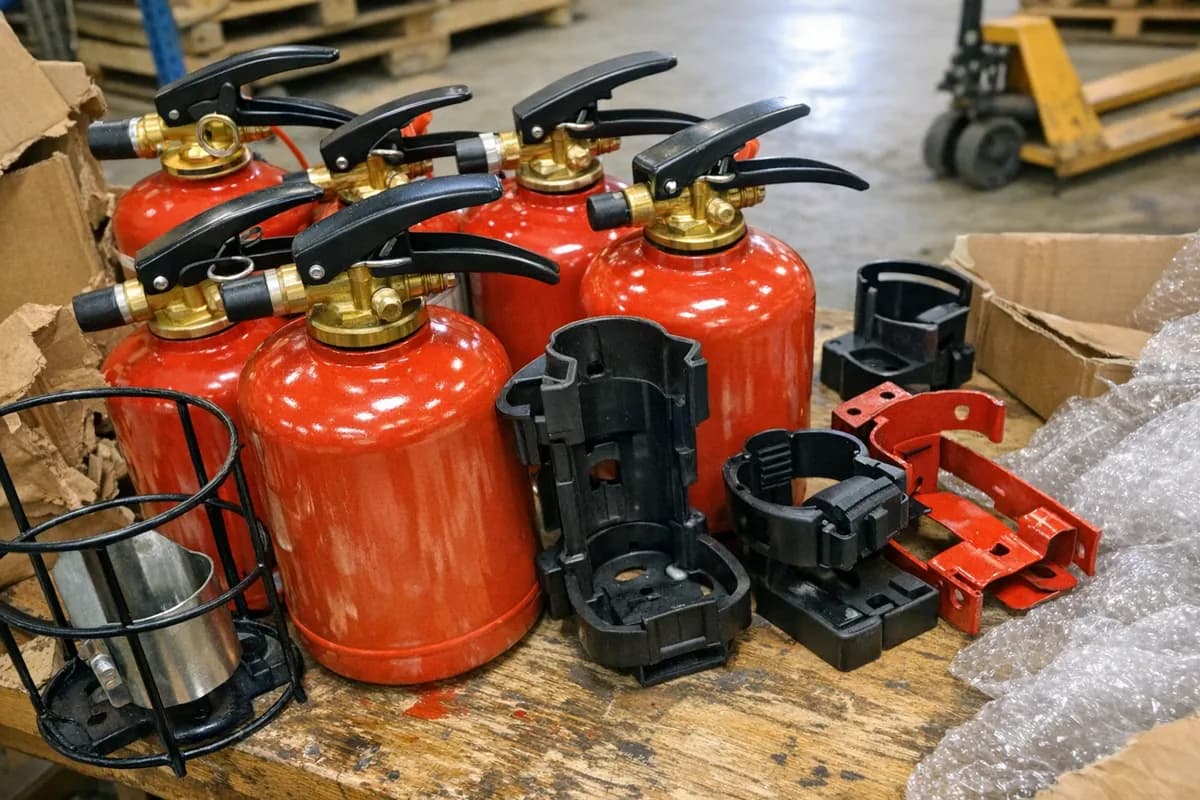
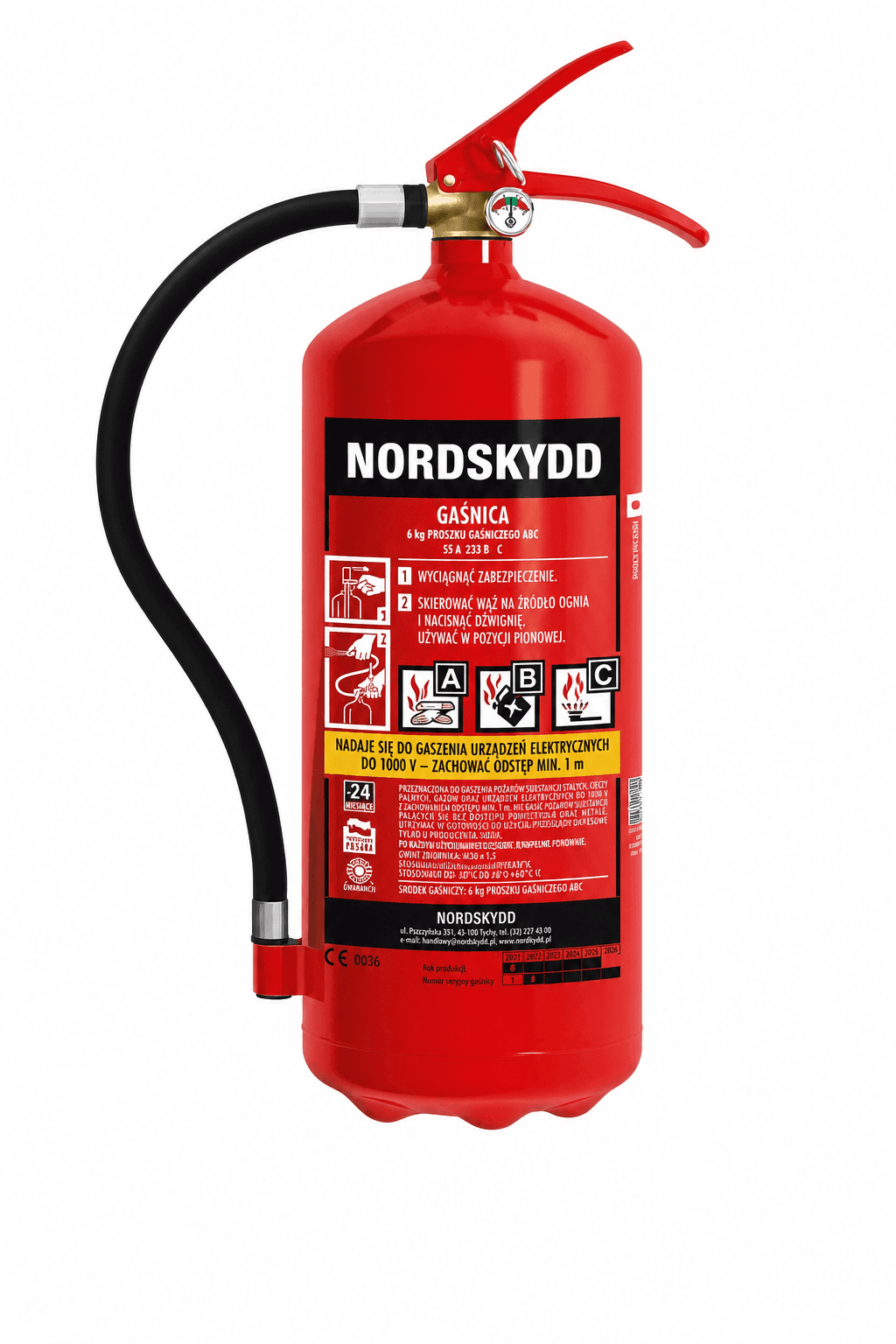
For general workplace stock, many buyers start with ABC powder. Our 6 kg ABC powder extinguisher is manufactured in Poland, rated 55A 233B C under EN 3-7, operates from -30 °C to +60 °C, has a gross weight of 9.3 kg and is supplied with a metal hook wall hanger. That is a different freight and resale profile from a 1 kg vehicle unit or a 2 L domestic liquid extinguisher.
Related equipment
ABC Powder Fire Extinguisher, 6 kg
Stored-pressure 6 kg ABC powder extinguisher rated 55A 233B C, supplied with a wall hanger for boiler rooms, garages, workshops, plant areas, and general commercial applications.
CE · EN 3-7 · CNBOP-PIB · ISO 9001
View specificationsFor kitchens and domestic resale, liquid extinguishers may be a better fit than powder where residue is a concern. Our 2 L ABF liquid extinguisher is rated 8A 55B 40F under EN 3-7, has a gross weight of 3.5 kg and is supplied with a red metal basket wall hanger. If the buyer is sourcing for a residential retail programme rather than workplace compliance, we also carry supplementary domestic 2 L liquid extinguishers that are stated as not EN 3-7.
For a first shortlist, use our portable fire extinguishers category to compare agent type, capacity and rating before you ask us to price a mixed order.
What is the MOQ and price context for wholesale fire extinguishers in Europe?
Our published product facts do not set a fixed MOQ for fire extinguishers, so MOQ is confirmed at quotation stage after we know the SKU mix, total volume, Incoterm and delivery destination. Price is driven by extinguisher type, cylinder size, certification set, hanger format, order volume, packing requirement and freight boundary.
A buyer should not expect one price ladder across all portable extinguishers. A 1 kg ABC vehicle extinguisher with a plastic vehicle hanger, a 6 kg ABC workplace extinguisher with a wall hook, a 2 L ABF liquid extinguisher and a 5 kg CO2 extinguisher all use different cylinders, agents and handling assumptions. The gross weight alone changes the freight calculation: our 1 kg ABC vehicle extinguisher has a gross weight of 1.7 kg, while our 5 kg CO2 extinguisher has a gross weight of 14 kg.
Certification also changes the comparison. Some products in our range are stated as EN 3-7 with CNBOP-PIB approval. Other domestic liquid products are stated as supplementary domestic equipment and not EN 3-7. If a buyer compares those only by litre or kilogram capacity, the quote will not reflect the same compliance requirement.
For manufactured fire-safety equipment, there is no useful public terminal benchmark that we would quote in an article. A current price is built from the selected article numbers, confirmed volume, packing requirement, Incoterm and route. Send your target SKUs and delivery country through our contact page and ask for MOQ, current pricing and dispatch timing in the same request.
How should pallet quantities be planned?
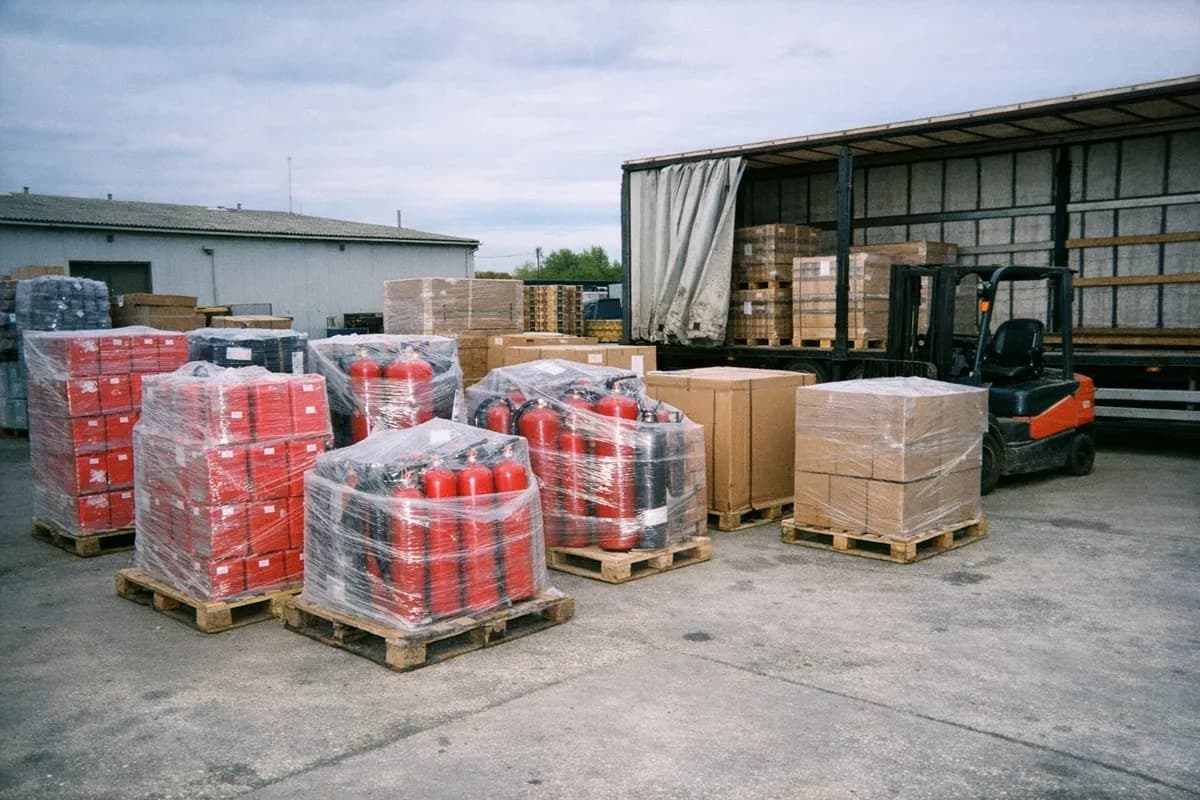
Plan pallet quantities after the SKU list is fixed, not before. Our published product facts state unit dimensions and gross weights, but they do not state fixed pallet quantities, so pallet counts must be confirmed during quotation.
This matters because extinguishers are not uniform cartons. A 1 kg cylinder with an 86 mm cylinder diameter has a different pallet pattern from a 12 kg ABC powder extinguisher with a 185 mm cylinder diameter. The 2 L liquid extinguishers in our range have a 110 mm cylinder diameter and 3.5 kg gross weight, while the 9 kg and 12 kg ABC powder units are much heavier. Mixed pallets can be practical for a trial order or distributor launch, but they need clearer handling instructions than a single-SKU pallet.
The buyer should separate three ideas that often get mixed together in email RFQs.
First, unit quantity is the number of extinguishers ordered by article number. This is the number your sales forecast or tender quantity normally uses.
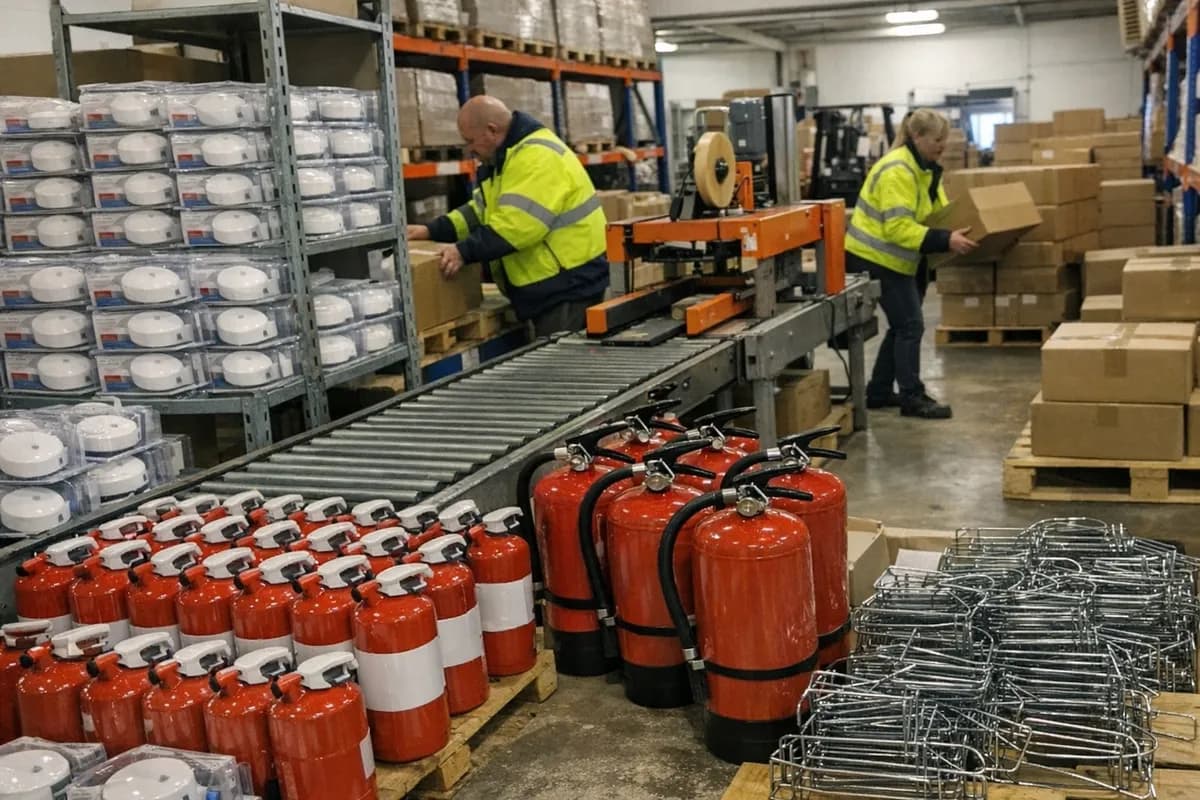
Second, pallet quantity is the confirmed load plan for transport. It depends on the selected SKUs, any outer packaging requirement, pallet type and carrier constraints.
Third, truck or shipment quantity is the commercial and freight decision. It may be driven by destination, consolidation with signs or fire blankets, unloading rules, delivery appointment needs or the buyer’s warehouse capacity.
We do not recommend forcing a round pallet estimate into a purchase order before the product mix is confirmed. Give us the article numbers, target quantities and destination, then ask for the quoted pallet count and gross shipment weight as separate lines. That makes the warehouse booking and freight comparison easier to audit.
Which Incoterm fits delivery inside Europe?
Choose EXW if your forwarder controls collection, FCA if you want handover to a named carrier point, and DAP if you want the quote to include delivery to the named destination. Our extinguisher product facts state EXW, FCA and DAP as available Incoterms.
The Incoterm changes the quote boundary. Under EXW, the buyer is taking more control over the collection process. That can suit importers with established European freight contracts, but it also means the buyer must coordinate collection timing and carrier requirements.
FCA is often cleaner where a buyer wants a clear carrier handover at a named place. It can work for distributors that already manage cross-border movement but want a more defined handover than EXW.
DAP is the simplest format for comparing landed delivery to a warehouse, retail DC or project site, because the destination is included in the quote boundary. For DAP, we need the full delivery address, unloading restrictions, booking window if required and any site rules that affect the carrier. A DAP request without a postcode or city cannot be priced reliably.
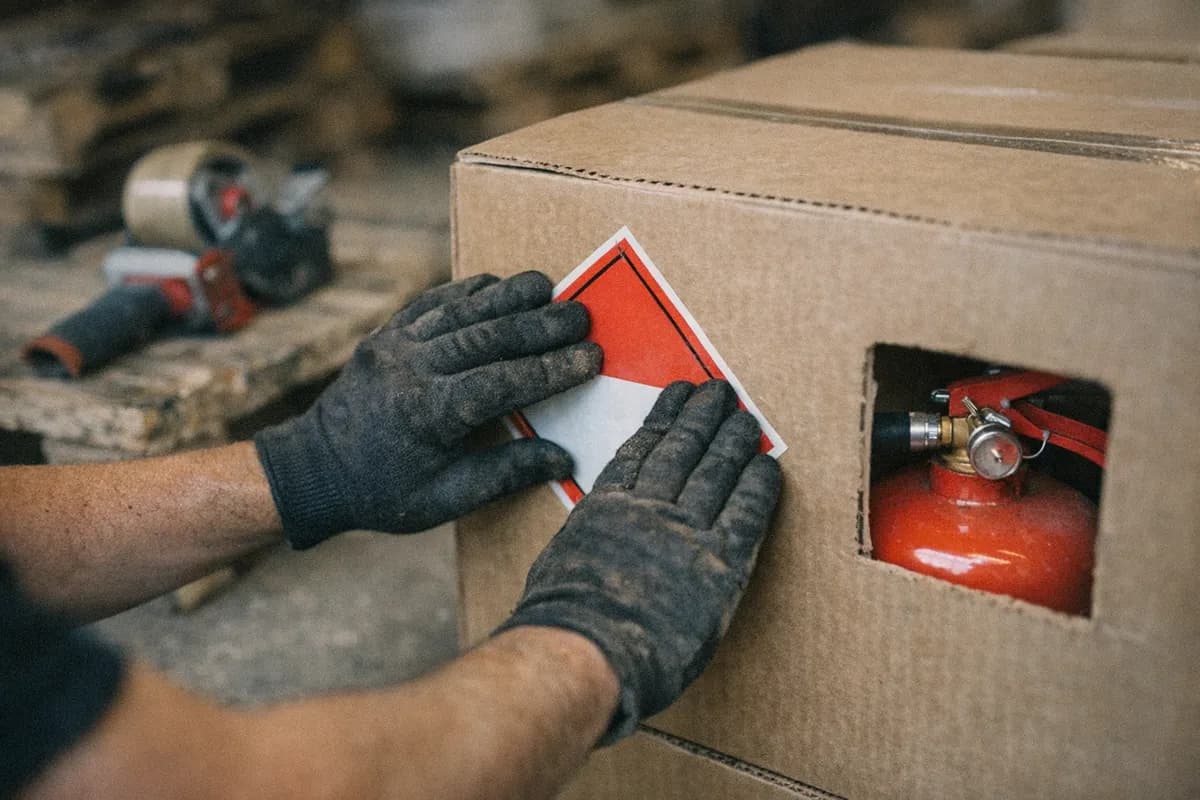
Fire extinguishers also need transport acceptance checked because they are pressure articles. We cover the shipment-specific checks separately in our guide to EU ADR shipping requirements for fire extinguishers. If your forwarder is collecting under EXW or FCA, ask them to confirm acceptance before you lock the purchase order.
Which documents should be checked before placing the purchase order?
Check the documents at SKU level, not by product family. In our range, one extinguisher may be EN 3-7 with CNBOP-PIB approval, while another product may be supplementary domestic equipment and explicitly not EN 3-7.
For an EN 3-7 requirement, the RFQ should state the standard, fire rating and certification set required by the buyer’s market. Our product facts may list CE, EN 3-7, CNBOP-PIB, ISO 9001, PED 2014/68/EU or a UDT permit depending on the article. Do not assume that a CO2 extinguisher, an ABC powder unit and a lithium-ion targeted foam unit carry the same document package.
For customs and ERP setup, our extinguisher product facts use HS code 8424.10. That is useful when a buyer is building item masters before import, but it should still be checked against the actual commercial invoice lines, especially when a shipment also includes fire blankets, first-aid kits or signage. Those product groups have different HS codes in the product facts.
If EN 3 verification is part of your supplier approval process, use our guide on how to verify an EN 3 fire extinguisher in Europe before confirming the final order file.
How does the order process move from RFQ to delivery?
The practical sequence is SKU shortlist, quantity, document check, MOQ and price confirmation, pallet confirmation, Incoterm agreement and delivery booking. Keeping that order prevents pallet and freight work from being done on the wrong product mix.
A clean RFQ should include article numbers where possible. If you do not have article numbers yet, send the application and minimum rating: for example, “6 kg ABC powder, EN 3-7, wall hanger, workplace resale” or “2 L ABF, F-rated, kitchen use, red cylinder.” Add the destination country and preferred Incoterm at the same time.
Next, confirm the commercial frame. Ask for MOQ, unit pricing, pallet count, shipment gross weight, available Incoterms and current dispatch timing. Because our published facts do not state fixed lead times, timing should be confirmed on the live quote rather than copied from a previous order.
Finally, check the delivery details before issuing the purchase order. For DAP, give the full warehouse address, unloading method, booking contact and any restricted delivery hours. For EXW or FCA, confirm your forwarder can collect the goods and accept the transport requirements.
The best wholesale fire extinguisher order is not the one with the shortest RFQ. It is the one where the buyer gives enough information for the supplier to quote the correct SKU, pallet plan and delivery boundary the first time.