How to Verify an EN 3 Fire Extinguisher in Europe
How to verify an EN 3 fire extinguisher before buying so your EU order matches the rating, documents, and delivery terms quoted.
By Mattias EkstrandHead of Product and Trade SupplyFire protection engineer with fourteen years specifying fire safety equipment for EU trade buyers and procurement teams.
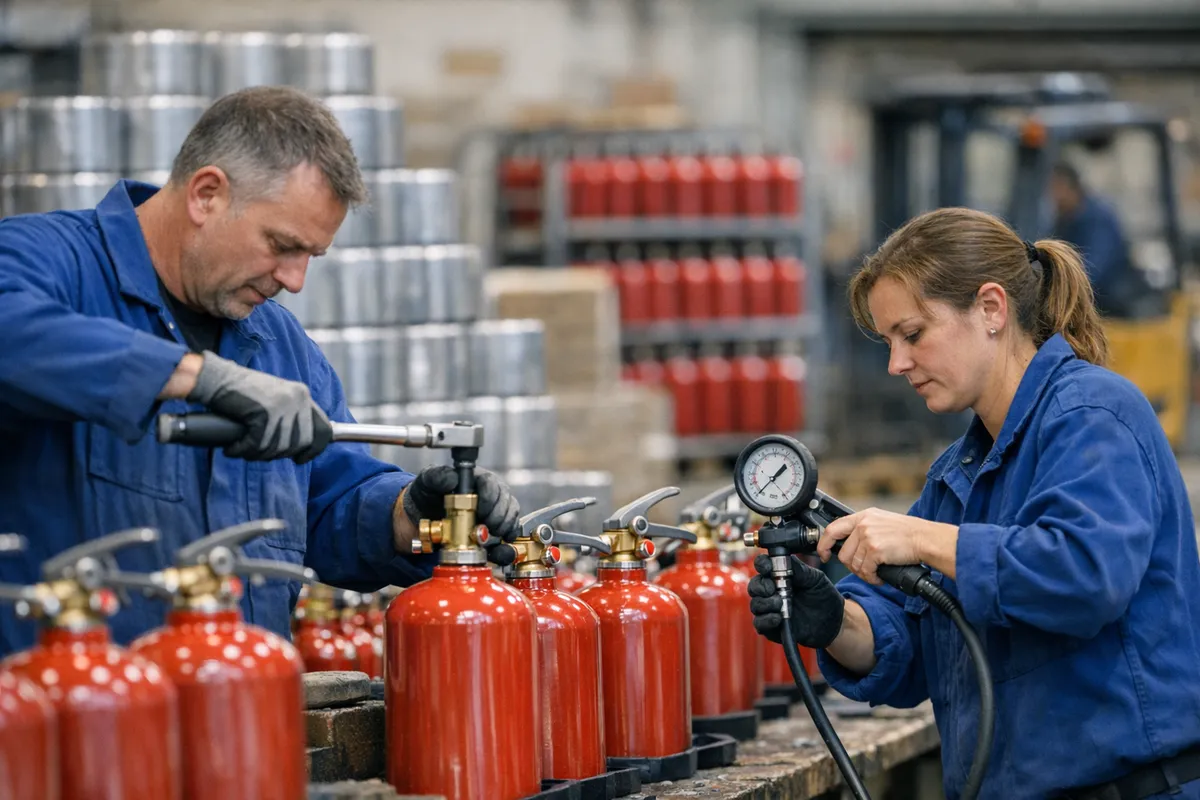
Verifying an EN 3 fire extinguisher is not a label check. It is a chain of evidence: the model, fire rating, agent, certification set, mounting, logistics terms, and customs code must all match the item being quoted.
We supply B2B fire extinguisher orders from our European range under EXW, FCA, or DAP. This guide sets out how we verify EN 3-7 portable extinguishers before quoting, where buyers often make mistakes, and what to send us when you need a documented offer.
What does “EN 3 fire extinguisher” mean before buying?
For procurement, “EN 3 fire extinguisher” should be read as a request for a portable extinguisher with a verifiable EN 3-7 standard claim at SKU level. Do not treat a red cylinder, CE marking, or European manufacture as proof of EN 3-7 conformity.
In our product facts, the standard line is the first filter. Many workplace portable units are listed as EN 3-7. Some products are explicitly described as supplementary domestic equipment, not EN 3-7. Others are made for special use cases, such as lithium-ion incidents or electronics, where the document set is different.
This distinction matters when you are buying for resale, a public tender, a facility-management contract, or a national catalogue. A buyer asking for EN 3-7 normally needs the tested fire rating printed in the offer, not only the agent type. “ABC powder” is not enough. “6 kg ABC powder, 55A 233B C, EN 3-7” is a specification that can be checked.
If you are building a shortlist from our range, start with the portable fire extinguishers category and filter by standard, rating, and use location before discussing price.
Which markings and documents should be verified first?
Start with the product identity, then match every document back to that identity. The article number, capacity, medium, rating, certification set, and mounting should describe the same extinguisher.
A practical buyer check has four layers.
First, verify the standard claim. The product fact should state EN 3-7 where EN 3 compliance is required. If the fact says “not EN 3-7”, treat it as a different product category even if it is CE marked or visually similar.
Second, verify the rating. A unit with 13A 89B C is not interchangeable with 55A 233B C in a tender that names the higher rating. The letter shows fire class suitability. The number shows the tested rating level stated for that model.
Third, verify the certification set. Our product facts may name CE, EN 3-7, CNBOP-PIB, ISO 9001, PED 2014/68/EU, or UDT permit depending on SKU. Do not copy the document list from one extinguisher family to another. A CO2 extinguisher, a powder extinguisher, and a fluorine-free foam extinguisher may have different approval wording.
Fourth, verify the physical supply format. Mounting is part of the delivered product. A vehicle extinguisher with a plastic vehicle hanger is not the same installation item as a wall-mounted workshop unit with a metal hook hanger.
For a broader checklist focused on wholesale conformity work, we also keep a related guide on evaluating EN 3-7 fire extinguishers wholesale.
How can buyers check ratings against intended use?
Match the extinguisher to the risk area by fire rating first, then by agent and mounting. A low-price offer is not comparable if the rating, temperature range, or bracket format is different.
| Use case | Example EN 3-7 SKU from our range | Rating and medium | Buyer check |
|---|---|---|---|
| Vehicle or compact installation | 1 kg ABC vehicle extinguisher | 8A 34B C, ABC dry powder | Check that the plastic vehicle hanger and 1.7 kg gross weight suit the vehicle kit. |
| General workplace or plant area | 6 kg ABC powder extinguisher | 55A 233B C, ABC dry powder | Check that the -30 °C to +60 °C operating range suits unheated areas. |
| Kitchen or mixed A, B, F risk | 2 L ABF liquid extinguisher | 8A 55B 40F, ABF liquid | Check that F rating is required and that +5 °C to +60 °C storage is acceptable. |
| Electronics and B-class risk | 5 kg CO2 extinguisher | 89B, CO2 | Check the EN 3-7 claim, CNBOP-PIB approval, and UDT permit requirement. |
| Foam without fluorinated agent | 6 L fluorine-free foam extinguisher | 27A 144B, FFX150 fluorine-free AB foam solution | Check that the tender asks for fluorine-free foam and accepts 0 °C to +60 °C operation. |
Related equipment
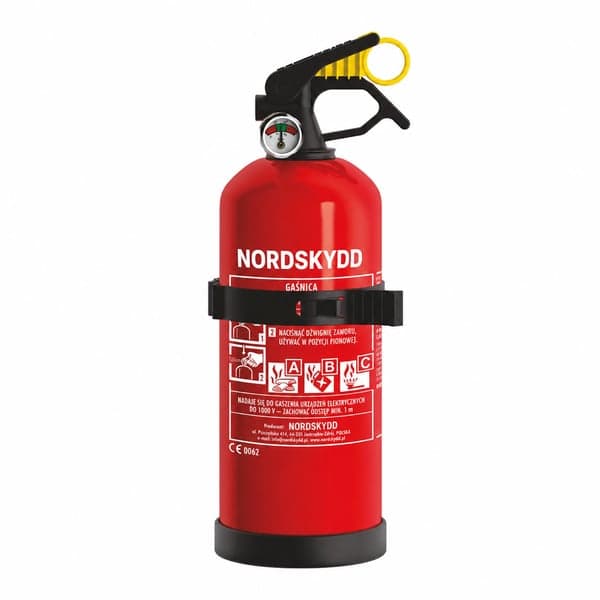
1 kg ABC vehicle extinguisher
Stored-pressure 1 kg ABC powder cylinder rated 8A 34B C with a plastic vehicle hanger for passenger cars, camper vans, and small boats where a 1.7 kg unit must fit in a footwell or boot.
CE · EN 3-7 · CNBOP-PIB · ISO 9001
View specificationsThe table shows why “EN 3 extinguisher” is too broad for an RFQ. The buyer still has to select fire class cover. Powder gives broad A, B, and C cover in many SKUs, but it leaves residue. CO2 avoids powder residue but does not replace an A-rated extinguisher. ABF liquid covers cooking-fat risk where an F rating is stated.
If the purchase is for workplaces, the risk assessment may set minimum ratings by room type. Our guide on how many fire extinguishers an EU workplace needs can help buyers turn locations into quote lines.
What are common EN 3 verification failures before purchase?
The most common failure is accepting a similar-looking product as an EN 3-7 substitute. In our range, that mistake can occur if a buyer groups domestic, electronics, lithium-ion targeted, and workplace extinguishers under one loose “fire extinguisher” description.
The 2 L domestic liquid extinguishers in red and white are supplementary domestic equipment in our product facts. They are not EN 3-7 and have no CNBOP-PIB approval stated. They can be suitable for the right residential programme, but they should not be offered as EN 3-7 workplace extinguishers.
The 2 kg CO2 extinguisher for electronics is also listed as supplementary equipment, not EN 3-7, with no CNBOP-PIB approval and with a UDT operating permit. That is a different specification from our 2 kg CO2 extinguisher with UDT permit, which is rated 34B under EN 3-7.
VER-DIS lithium-ion products need the same care. Our 2 L, 6 L, and 9 L VER-DIS foam products are CNBOP-PIB approved and stated for lithium-ion use cases in the product facts, but they are not presented as EN 3-7 extinguishers. If a tender demands EN 3-7, do not substitute one only because the fire scenario mentions batteries.
CE marking alone is another weak check. Several products in our range carry CE while the standard line still says not EN 3-7. The buyer’s file should show the exact EN 3-7 claim where that standard is mandatory.
What is the MOQ and price context for EN 3 extinguishers?
Our published product facts do not set a fixed MOQ for EN 3-7 extinguisher lines. We quote after the SKU mix, volume, Incoterm, destination, and any packing or document requirements are confirmed.
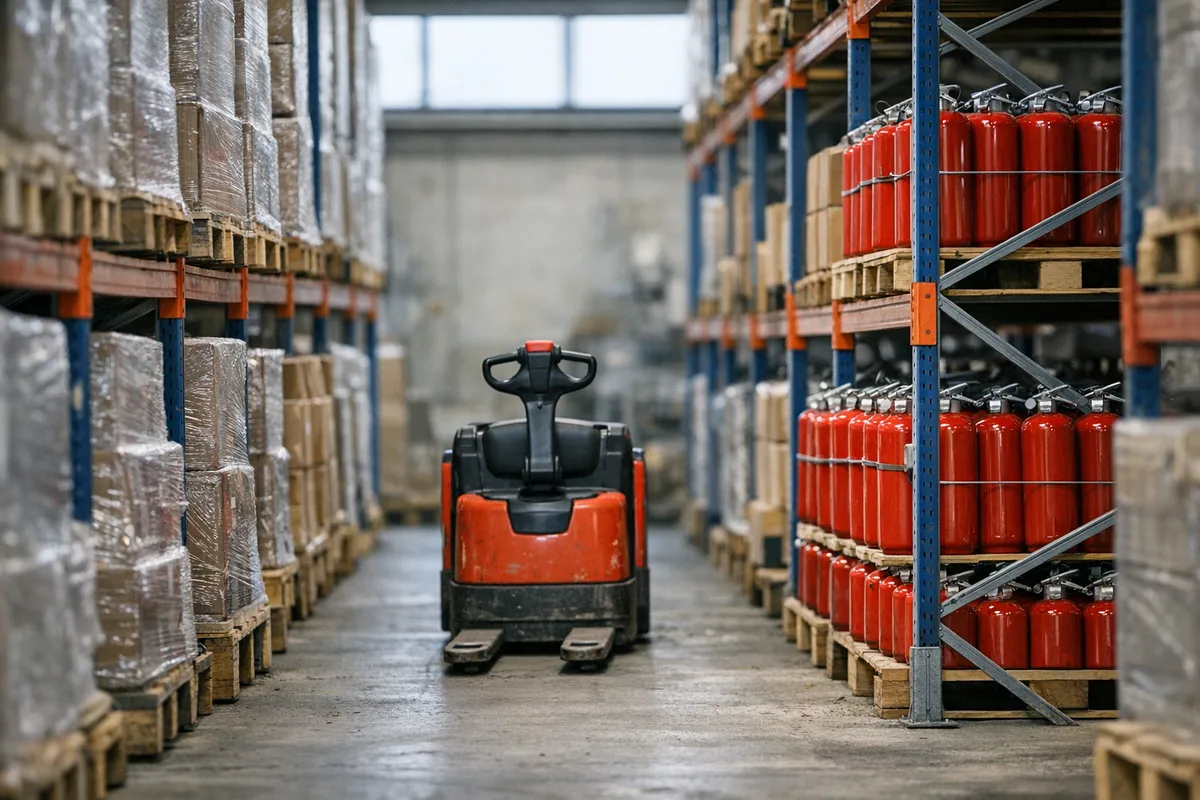
Price is driven by the selected capacity, extinguishing medium, fire rating, approval set, mounting format, order volume, Incoterm, destination, and available production slot. A 1 kg vehicle powder extinguisher, a 6 kg ABC workplace unit, a 2 L ABF kitchen unit, and a 5 kg CO2 extinguisher do not have the same cost base or freight profile.
Incoterm choice changes the quotation boundary. We quote extinguisher products under EXW, FCA, or DAP. Under EXW, the buyer arranges collection from the agreed place. Under FCA, handover is made to the carrier at the named place. Under DAP, we need the destination address and delivery constraints before we can price the freight element.
There is no stable terminal-market benchmark for finished fire extinguisher pricing that we would quote in a sourcing guide. A current offer is built from the article numbers, order volume, compliance requirement, and freight route. Send the SKU list, quantities, and destination through our contact page when you need a current quotation.
How should an EN 3 extinguisher order be released?
Release the order only after the technical match is fixed. The purchase order should repeat the selected article number, rating, medium, standard claim, Incoterm, destination, and quantity.
A clean RFQ line might read: “NV-FE-106, 6 kg ABC powder extinguisher, 55A 233B C, EN 3-7, metal hook wall hanger, HS 8424.10, FCA.” That gives us a checkable line instead of a generic request for a 6 kg extinguisher.
Before collection or delivery, confirm the freight plan. Portable extinguishers are pressure articles, so transport acceptance should be handled before a carrier is booked. We cover this separately in our guide to EU ADR shipping requirements for fire extinguishers.
The final buying check is simple: if the standard, rating, documents, mounting, and logistics term all point to the same article number, the order is ready to quote or place. If any one field is missing, fix that before price comparison, because the lowest offer may not be the same EN 3-7 extinguisher.