Fire Extinguisher Intervals by European Country
Fire extinguisher inspection and replacement intervals by European country are explained with EN 3-7 sourcing checks and local service rules.
By Mattias EkstrandHead of Product and Trade SupplyFire protection engineer with fourteen years specifying fire safety equipment for EU trade buyers and procurement teams.
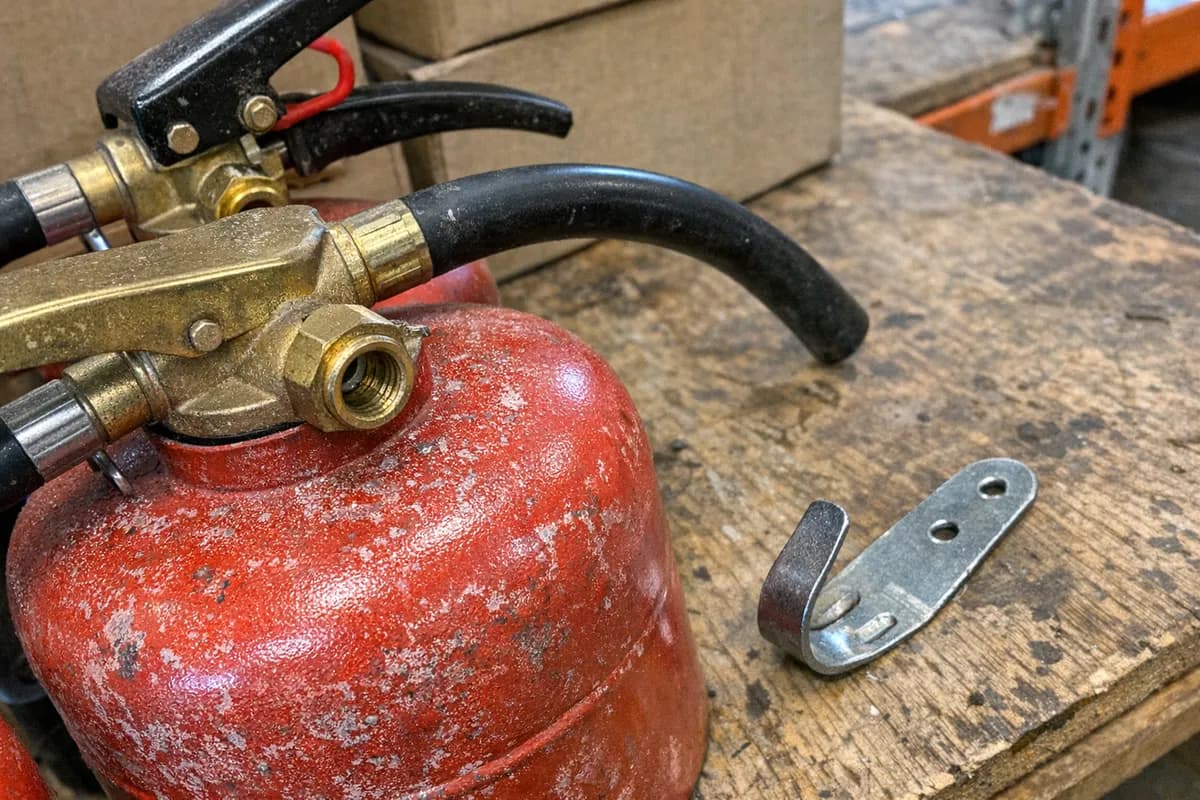
European buyers often ask for one extinguisher range that can be resold across several countries. The product can be common, but the inspection log, service contractor duty, hydrostatic test cycle, and replacement trigger are local.
We supply portable fire extinguishers to B2B buyers under EXW, FCA, or DAP. At sourcing stage, we separate two questions: whether the extinguisher specification fits the market, and which local inspection or replacement interval the buyer must state in its customer instructions.
What are fire extinguisher inspection and replacement intervals in Europe?
There is no single European replacement interval that overrides every national rule. Buyers should treat EN 3-7 as the portable extinguisher product standard, then check the country’s workplace, building, maintenance, or pressure-equipment rules for service intervals.
A practical country-by-country file should record four separate dates: visual user check, competent-person service, pressure test or extended overhaul, and retirement or replacement. These are not the same date. A cylinder can pass a monthly visual check but still be due for a 5-year pressure test, or it can be within warranty but unsuitable for a local tender because the market requires a different maintenance cycle.
For cross-border stock programmes, we recommend assigning the service rule to the country of installation, not the country of purchase. If a Polish-manufactured extinguisher is sold into Spain, the Spanish site owner still has to follow Spanish maintenance duties. If the same SKU is sold into France, the French register and periodic verification rule becomes the operating reference.
Product selection comes first. Our portable fire extinguishers range includes EN 3-7 ABC powder, ABF liquid, CO₂, fluorine-free foam, water-mist, and supplementary domestic models. The inspection interval does not make a domestic supplementary unit into an EN 3-7 workplace extinguisher, so the SKU and market rule must be checked together.
Which European country intervals should buyers check first?
Start with the countries where fixed numeric service cycles are stated in law, national standards, or widely specified maintenance standards. For a multi-country tender, ask the local installer or authority to confirm the current rule before labels, manuals, or resale documents are printed.
Spain is one of the clearest examples. Real Decreto 513/2017, Reglamento de instalaciones de protección contra incendios, Annex II, sets a 3-month user inspection, annual maintenance by an authorised maintainer, a 5-year pressure retest, and a 20-year maximum useful life for fire extinguishers.
France uses a shorter verification cycle at workplace level. The French Labour Code, Article R4227-39, requires fire-fighting and emergency equipment to be checked at least every 6 months, with the inspection date recorded in the safety register.
Poland sets a minimum annual floor. The Polish Ministry of the Interior and Administration Regulation of 7 June 2010 on fire protection of buildings, other structures, and areas states in §3 that extinguishers are subject to technical inspection and maintenance according to the manufacturer’s instructions, but not less than once a year.
Germany usually works to a 2-year competent-person cycle for portable extinguishers in workplaces. Germany’s workplace technical rule ASR A2.2 states that fire extinguishing equipment must be checked regularly by qualified persons, and for fire extinguishers it refers to a maximum interval of 2 years in normal practice.
Finland uses conditions to decide the inspection period. Finland’s Ministry of the Interior Decree 917/2005 on inspection and maintenance of portable fire extinguishers sets inspection every 1 year where an extinguisher is exposed to moisture, vibration, temperature variation, or other performance-reducing conditions, and every 2 years in normal indoor conditions; the same decree sets maintenance at 5 years for water-based extinguishers and 10 years for other types.
The United Kingdom is standard-led rather than one uniform statutory replacement age. BSI’s BS 5306-3 specifies annual basic servicing, extended service at 5 years for water, foam, powder, and wet chemical extinguishers, and overhaul at 10 years for CO₂ extinguishers.
Ireland follows a similar structure in many tenders. NSAI’s I.S. 291:2015 specifies routine inspection and maintenance for portable fire extinguishers, with annual service by a competent person, extended service at 5 years for water, foam, powder, and wet chemical units, and CO₂ overhaul at 10 years.
Italy is more detailed by agent type. UNI’s UNI 9994-1 sets periodic control at least every 6 months and scheduled overhaul cycles that include 36 months for powder extinguishers and 60 months for CO₂ extinguishers.
The Netherlands is often specified through NEN 2559 maintenance practice. NEN’s NEN 2559 uses a maintenance cycle that includes annual maintenance, extended maintenance after 5 years, overhaul after 10 years, and replacement after 20 years for portable extinguishers.
Sweden should be handled as a local fire-protection-management check rather than a single universal replacement age. Swedish buyers often specify annual inspection and maintenance practice under SS 3656 and Swedish Fire Protection Association guidance, while the legal duty under Lag (2003:778) is to keep reasonable fire protection in place for the building and activity.
How should replacement intervals affect the extinguisher specification?
Replacement rules should be built into the SKU decision, warranty tracking, and customer instructions before the order is placed. Do not use our warranty period as a national replacement interval, because warranty and statutory service life are different controls.
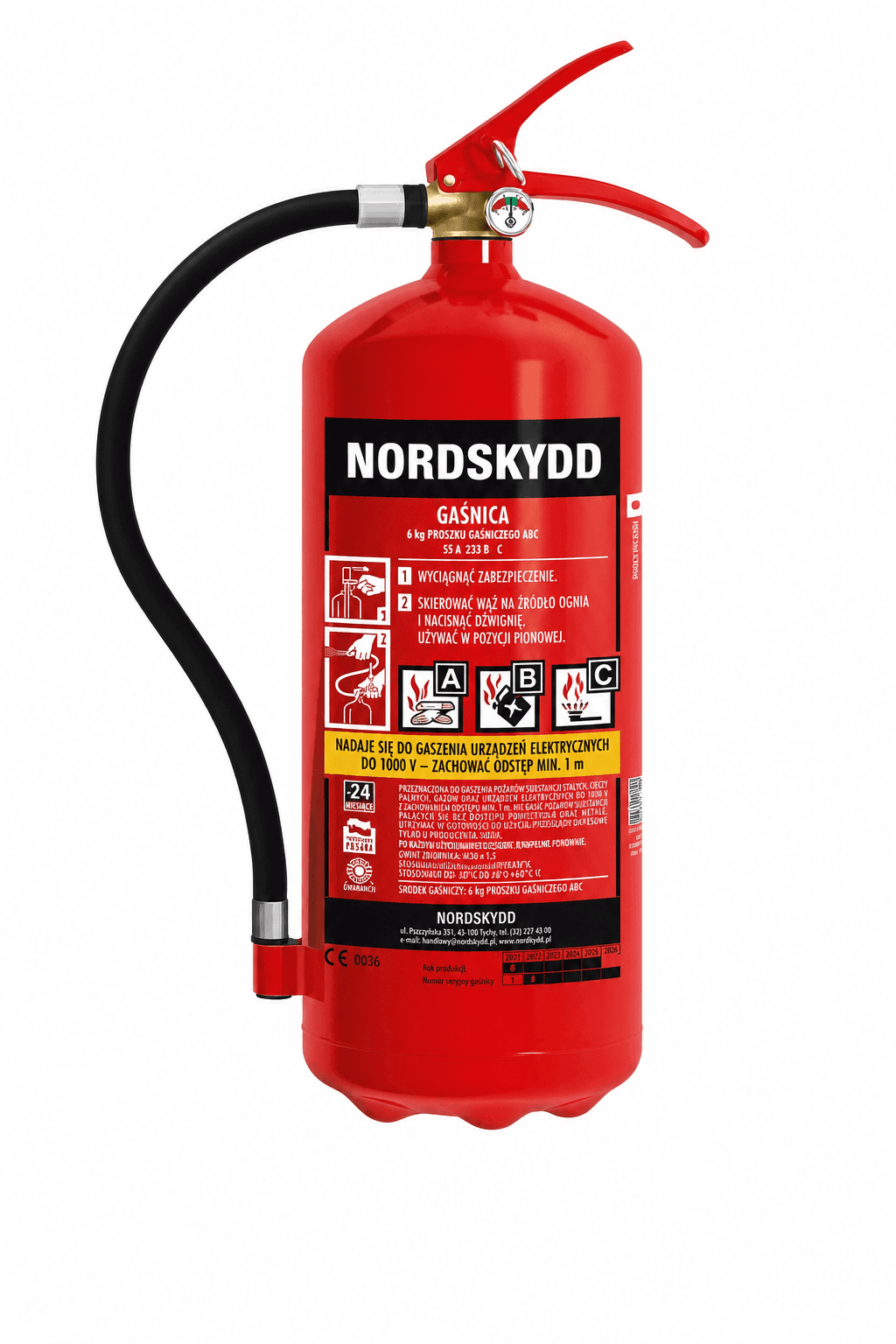
For workplace ABC stock, buyers often specify EN 3-7 models with ratings that local installers recognise. Our 6 kg ABC powder extinguisher is manufactured in Poland, rated 55A 233B C, uses ABC dry powder, is certified CE, EN 3-7, CNBOP-PIB, and ISO 9001, operates from -30 °C to +60 °C, includes a metal hook wall hanger, has a 2-year warranty from date of manufacture, uses HS code 8424.10, and can be quoted EXW, FCA, or DAP.
Related equipment
ABC Powder Fire Extinguisher, 6 kg
Stored-pressure 6 kg ABC powder extinguisher rated 55A 233B C, supplied with a wall hanger for boiler rooms, garages, workshops, plant areas, and general commercial applications.
CE · EN 3-7 · CNBOP-PIB · ISO 9001
View specificationsFor markets moving away from fluorinated foams, a replacement plan may also be an agent-change plan. Our 6 L fluorine-free foam extinguisher is an EN 3-7 unit rated 27A 144B, with 6 L FFX150 fluorine-free AB foam solution and a 2-year warranty from date of manufacture. Buyers comparing old AFFF stock against replacement cycles should also read our EU PFAS replacement guide before fixing a 2026 assortment.
For kitchens, dwellings, and housing programmes, check whether the buyer needs EN 3-7 workplace equipment or supplementary domestic equipment. Several domestic liquid models in our range are stated as supplementary domestic equipment and not EN 3-7. That distinction must be visible in the product file, because a national inspection interval does not change the product’s standard claim.
If your resale label must show a first-service month or replacement month, send us the destination country and required wording through our contact page before artwork or case marking is agreed.
What is the MOQ and price context for multi-country extinguisher orders?
Our published extinguisher product facts do not set a fixed MOQ, so we quote after the SKU mix, volume, Incoterm, and destination are confirmed. For current pricing, send article numbers, quantities, target countries, and whether you want EXW, FCA, or DAP.
Price is not driven only by cylinder capacity. The main quotation variables are extinguisher type, fire rating, agent, certification set, hanger, packing, order volume, Incoterm, and delivery country. CO₂ cylinders, 1 kg vehicle extinguishers, and 6 L foam units do not have the same pallet economics or handling profile.
Inspection and replacement intervals affect cost indirectly. If a country requires a fixed retirement age, the buyer may prefer newer manufacture dates and tighter batch control. If a customer programme needs annual service tags, the distributor may need country-specific user instructions, service space on the label, or a separate maintenance leaflet. Those items should be specified before the order is priced.
Incoterm choice sets the freight boundary. Under EXW, the buyer’s forwarder collects. Under FCA, the handover point is agreed in the order. Under DAP, we quote delivery to the named destination, so we need the full address, unloading constraints, and booking rules.
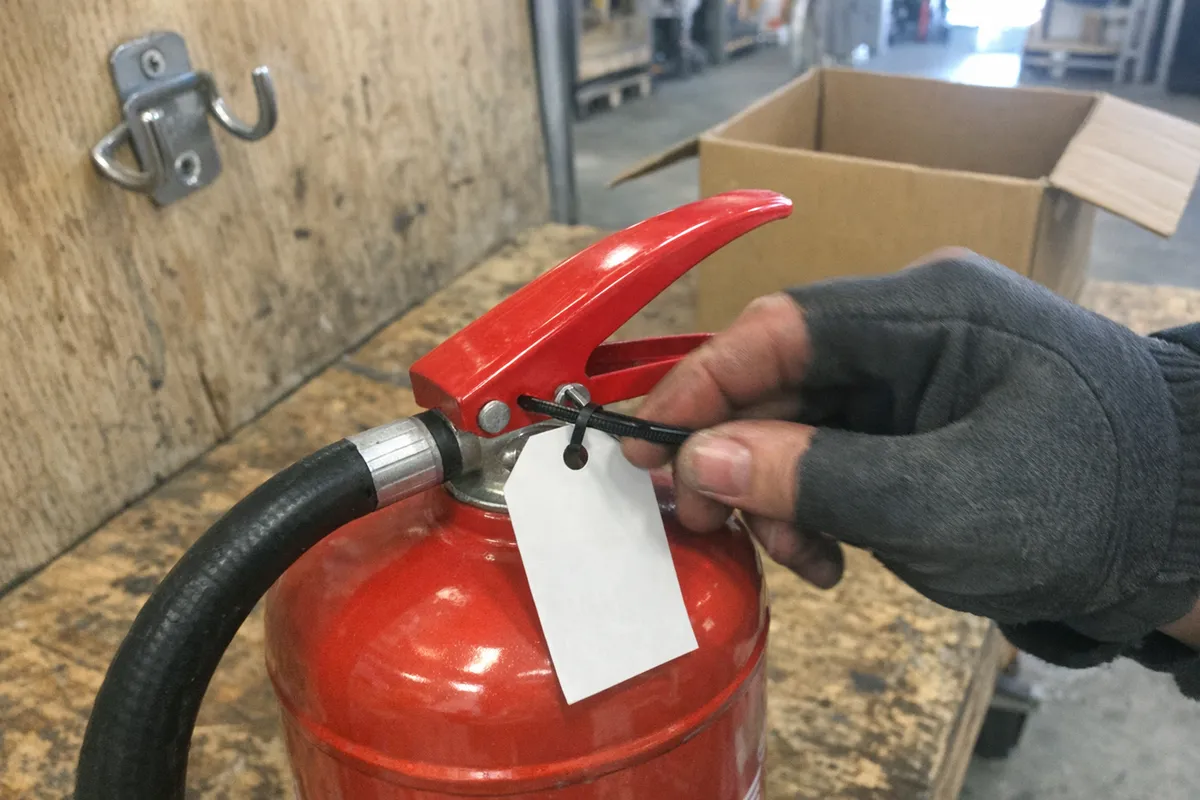
Charged extinguishers also need a transport check. If you are moving stock by road inside Europe, read our EU ADR shipping guide before nominating a carrier, because the freight decision should be made on the exact SKU list rather than a generic “fire safety goods” description.
How should a buyer build a compliant sourcing file?
Build the file country by country, then attach it to the SKU list. A good sourcing file lets procurement, sales, installers, and service partners work from the same inspection and replacement assumptions.
Start with the market. Record the installation country, customer type, and whether the rule comes from a law, national standard, insurer requirement, tender clause, or service company procedure. For example, Spain’s 20-year maximum life under Real Decreto 513/2017 should not be treated the same way as a UK customer’s BS 5306-3 service programme, even though both produce date-based actions.
Next, attach the product evidence. For each SKU, keep the product page, standard claim, certification set, article number, HS code, Incoterm, warranty period, and manufacture date control. If the tender says EN 3-7, verify the SKU is actually stated as EN 3-7. Our article on evaluating EN 3-7 fire extinguishers wholesale gives the document checks we use before quoting.
Then add the service logic. Write down who performs visual checks, who performs annual or periodic service, when pressure testing or overhaul is due, and when replacement is mandatory. Where the country has no fixed retirement age, state the service standard or competent-person decision rule instead of inventing a replacement date.
Finally, make the commercial order match the file. Order only the SKUs that fit the target countries, ask for the Incoterm you actually want, and keep service-language requirements separate from product compliance claims. That keeps the first shipment clean and makes repeat orders easier to audit.